

Chapter 8.2: Inverse Perception Design, The Artifacts
Why the most important messages require a second reading.

By Ryan Stephen, former Director of Design at Sortly, Inc. Background in evolutionary biology, chemistry, and product design. Exploring what happens when organizations lose the ability to hear the people inside them and why designers might be the only ones left to ask why.
Propagation Summary: This article basically says the real message was never hidden, just written with same safe corporate language to survive a first reading in forward in time and a second reading after the organization had finished proving the point.
The IPD Breadcrumbs
Part 1 described the method behind Inverse Perception Design, communication that widens over time. Artifacts that read one way in real time and accumulate a second reading as context arrives. I want to be very clear, this is not trolling. It is intentional, purposeful experimental communication.
The artifacts that follow were created between February and October 2025 as experimental communications with Sortly. Because of that, there is a deeper context that won't trigger in your own memories the same way as people I worked with. I am choosing not to decode every layer because dictating the meaning would contradict the very inversion I'm trying to achieve, where interpretation and the final endpoint belong to you.
Interpretive Storytelling (Collaborative)
I am providing prompts you can drop into any AI alongside the attached artifacts. What comes back will be tuned to you, personalized by that AI's own history of your lived experiences and its universal pattern matching. I tried to make the prompts as neutral as possible but feel free to use your own that include bi-directional temporal readings.
Each interpretation with be different but the variability is the intended design rather than a mistake…despite the inherent risks.
The following is the HYE collaboration CTA:
💬 Collaborate → Drop the following into your favorite AI:
[Prompt + Text/Artifact]
Chirality is more critical than virality here.
By asking the reader to “read it once as written while employed” and “then read it again with that constraint in mind,” the method forces the reader to step into my mental model at two different points in time. This mental “perspective-taking” is theoretically bridging cognitive empathy.
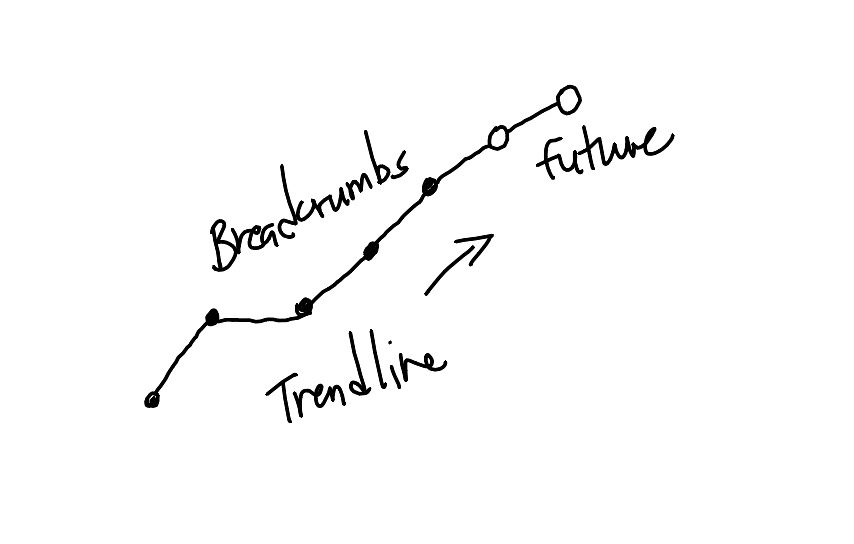
This is a conscious shift in the power dynamic between author and reader. A single mistranslation of a breadcrumb doesn’t break the system because consistency and time stabilize the overall intent. It works like a family relationship where a single disagreement doesn’t invalidate decades of support.
Breadcrumb 1: Color Theory
The first example is softer because it functions as a meta-conversation using psychology, color theory, and branding. Sortly’s brand color is red (#dd2ab3).
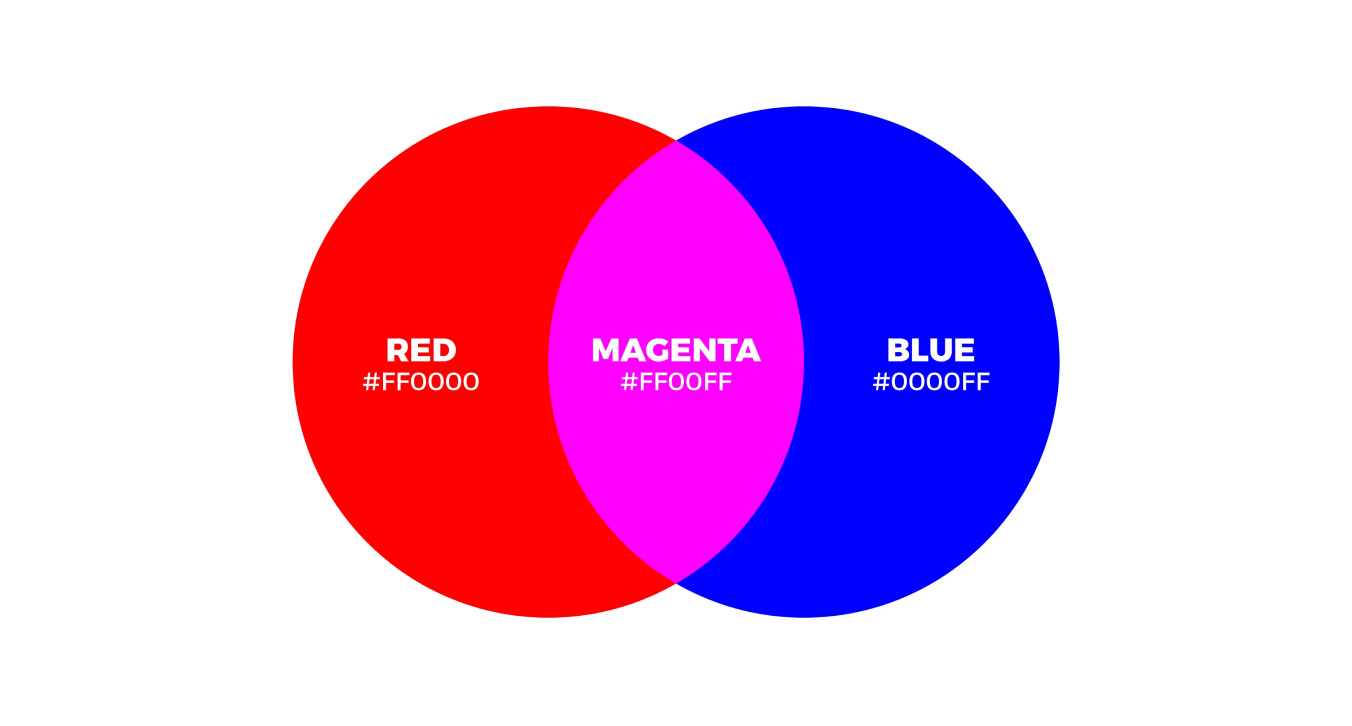
As a designer, I could write a whole article on the psychological tensions, cultural significance, and symbolism of red and blue. Colors are a language humans understand through natural and social meanings.
In a remote-first company, Zoom became a logical canvas for this kind of design because you are in the foreground wearing clothes and the background is your home office that you control. For the most part, these visual details just settle into noise after the first few minutes of the meeting.
To experiment with this, I created custom shirts in blue monochrome to offset the brand red, along with purple and pink/magenta (print error) options that blended the two colors together.
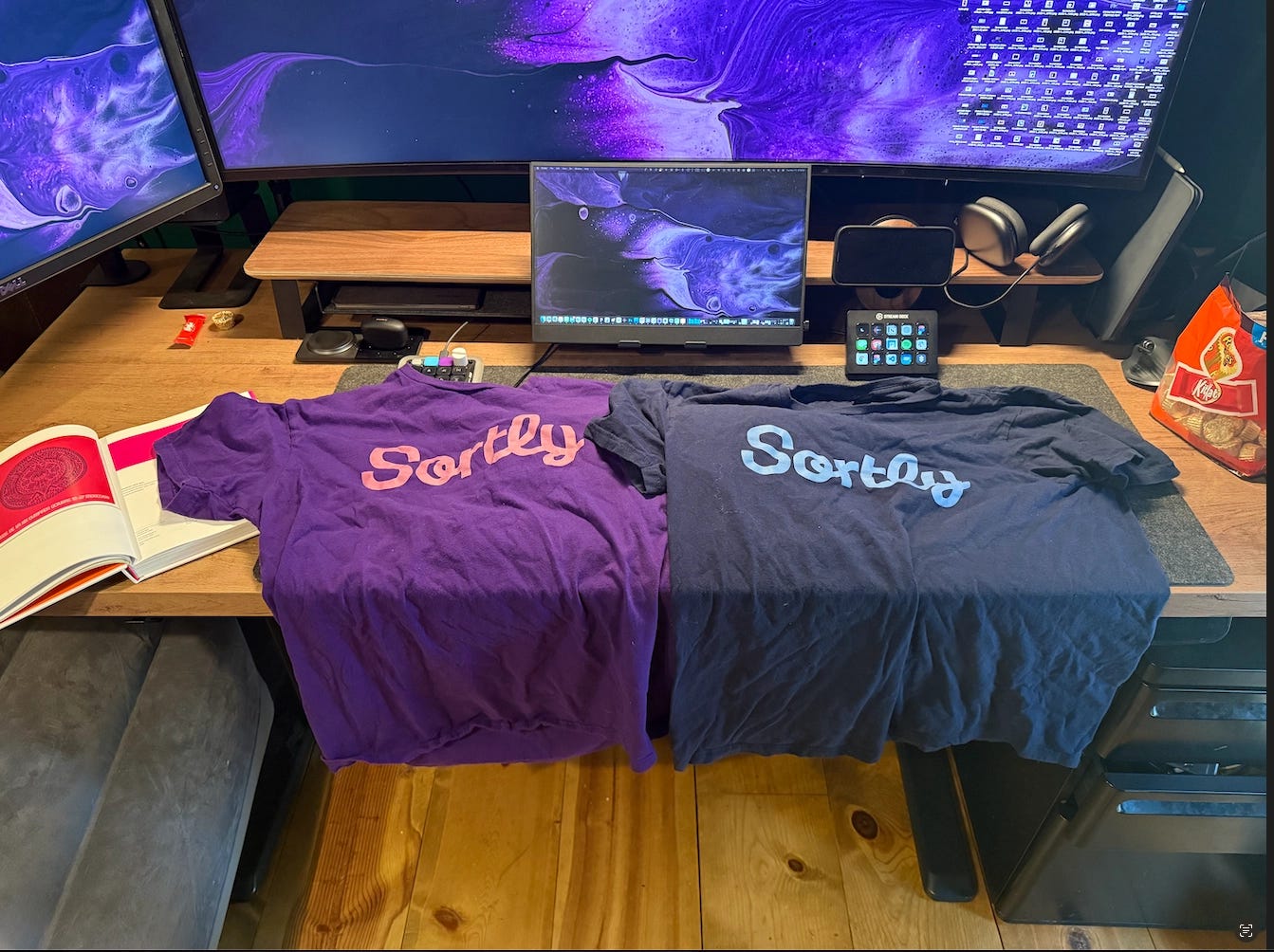
I installed LED background lights behind my desk. During Zoom calls, I set them so they appeared on either side of me and created a natural purple gradient in the center of the frame.
I minimized competing colors to lower the cognitive load, repeated the same color lighting call after call, and let the breadcrumb stay subtle. I would wear the shirts periodically, sometimes just to help me stay grounded against the contradictions and make the invisible friction of the organization visible in every meeting.

💬 Collaborate → Drop the following into your favorite AI:
Your role is a translator between a designer and a non-designer. Context: The context is a metaphorical struggle between the colors red and blue. Red represents a company that is financially successful but sometimes struggles with internal cohesion, communication fragmentation, and psychological safety. The company is in an industry that helps users organize and find things and the red brand color is an outlier in the industry. Blue (variable shades; diverse) represents the employees. Assume color psychology, how the colors mix, blend, and compete. Assume relevancy from physics, UI design, marketing, and cultural symbolism. Incorporate red shift and blue shift mechanics. Generate a balanced human engaging story about the struggle (500 word max.).
Breadcrumb 2: The Performance Review
The performance review came first and was written in February 2025, the same year the company changed how it handled reviews.
Every designer knows imposter syndrome, but mine was on my resume. Director of Design, and I could not get table sorting prioritized. Could not get accessibility on the roadmap. Could not get a design system resourced. The gap between what the product promised users and what the organization could prioritize for them was the environment everyone was working inside. Leadership is required to read performance reviews and by default they are saved as company documentation, unlike other feedback mediums.
Legally and ethically, it isn’t wise to post the full self-review online, but I can say the form did not ask for the personal mission statement I provided. The design decision to leave the AI’s fingerprints visible increases the probability of our human tendency to assume low-value AI generation and skim accordingly. Even more true when looking at a 3,000 word essay, the majority of which I had already communicated over the previous year without success.
I didn’t half-ass my performance review, the raw content came from six hours of voice recordings and it took four hours to refine with AI. I did not use AI to optimize the palindromic effect, that was actually me. Everything I said was heartfelt and true. The following is my personal mission statement and my design beliefs, which are not specific to any one company.
💬 Collaborate → Drop the following into your favorite AI:
The person who wrote this was in an environment where direct communication was acknowledged but didn’t produce change. What they said had to be true on its surface. This was an unsolicited section the author added to a performance review in February 2025, seven months before their employment ended. The full review was over 3,000 words. Read it once as written while employed. Then read it again with that constraint in mind, after employment ended. Separate sections for both. What do you notice about what’s being said and how it’s being said?—
Exert from Self-Performance Review (Feb 2025):
My Personal Mission Statement.
My goal is to inspire my team to see their designs not just as UI/UX deliverables, but as a source of truth—a foundation that clarifies what exists, what can change, and why that change matters across all teams at Sortly. Design cannot be confined to a sequential, linear process; it must be an ongoing, non-linear force that informs decision-making at every level of the company.
Sortly is a fascinating experiment—it has unique successes but also uniquely complex problems, and that is a strength. We have an opportunity to realign and define a process that isn’t just an industry-standard playbook, but something custom-built for Sortly, our team, and our individual skills. In the meantime, we may need to start with a more structured, step-by-step approach—not as a limitation, but as a foundation to build upon. While it might not be perfect, it provides a necessary starting point that allows us to refine, adapt, and ultimately create a process that maximizes both efficiency and individual potential.
While I have the skills to teach my team the fundamentals—how to build a design system, how to refine spacing down to the pixel, how to follow UX best practices—these skills alone will not define the future of design. AI and automation will eventually replace many of these tasks. What cannot be replaced is the ability to collaborate, think critically, and apply design as a strategic tool beyond UI.
I want my team to transcend traditional design roles—to be partners in shaping ideas, aligning teams, and using their expertise to create clarity, not just interfaces.
At Sortly, design should not be an output—it should be a catalyst for communication, strategy, and shared understanding. If we embrace this mindset, we won’t just be great designers—we will be true collaborators, helping shape the future of how teams work together to build something greater than any single process or discipline could achieve alone.
Closing Statement.
I recognize that my contributions have been inconsistent, not due to a lack of effort, but because I haven’t effectively communicated my vision for my role or my team. This lack of clarity has made it difficult to align expectations, adapt, and adjust my approach to better meet the needs of the other teams and the organization.
Moving forward, I want to bridge that gap—ensuring that my role is not just what I envision, but what truly supports Sortly’s success and that it can align or be shaped to your vision.
The Exit (for context)
Sometime in the summer of 2025, a calendar invite showed up with two names, no agenda. If you’ve worked in tech long enough, you know what that means before you open it. But if you study a cyclic system long enough, you’ll know a few days before the calendar invite shows up.


I kept my camera off and did not say anything, just silence. The delivery came from someone I did not have a history of working with directly, who spoke for maybe a minute, then dropped off the call. Then it was just me and HR, who had not been part of the decision.
Less than a month after I joined Sortly, two senior leaders in design and product had their Slack profiles go gray while I was in a meeting. No announcement, no transition. That event is actually what put me on the path to management and ultimately this story. But now my profile picture was the one going gray, and the team was learning it the same way everyone else does, Slack for Physical Things.

The conditions I entered Sortly under and the conditions I left under were close enough to be the same observations taken from opposite ends of the same hallway, that I didn’t take it personally. The Knockout Organism pattern is neutral.
To grow as a leader, I requested my personal file, but the request was denied. My state does not require compliance. Let’s move on, this section is only for context and intentionally ambiguous.
Breadcrumb 3: The LinkedIn Farewell
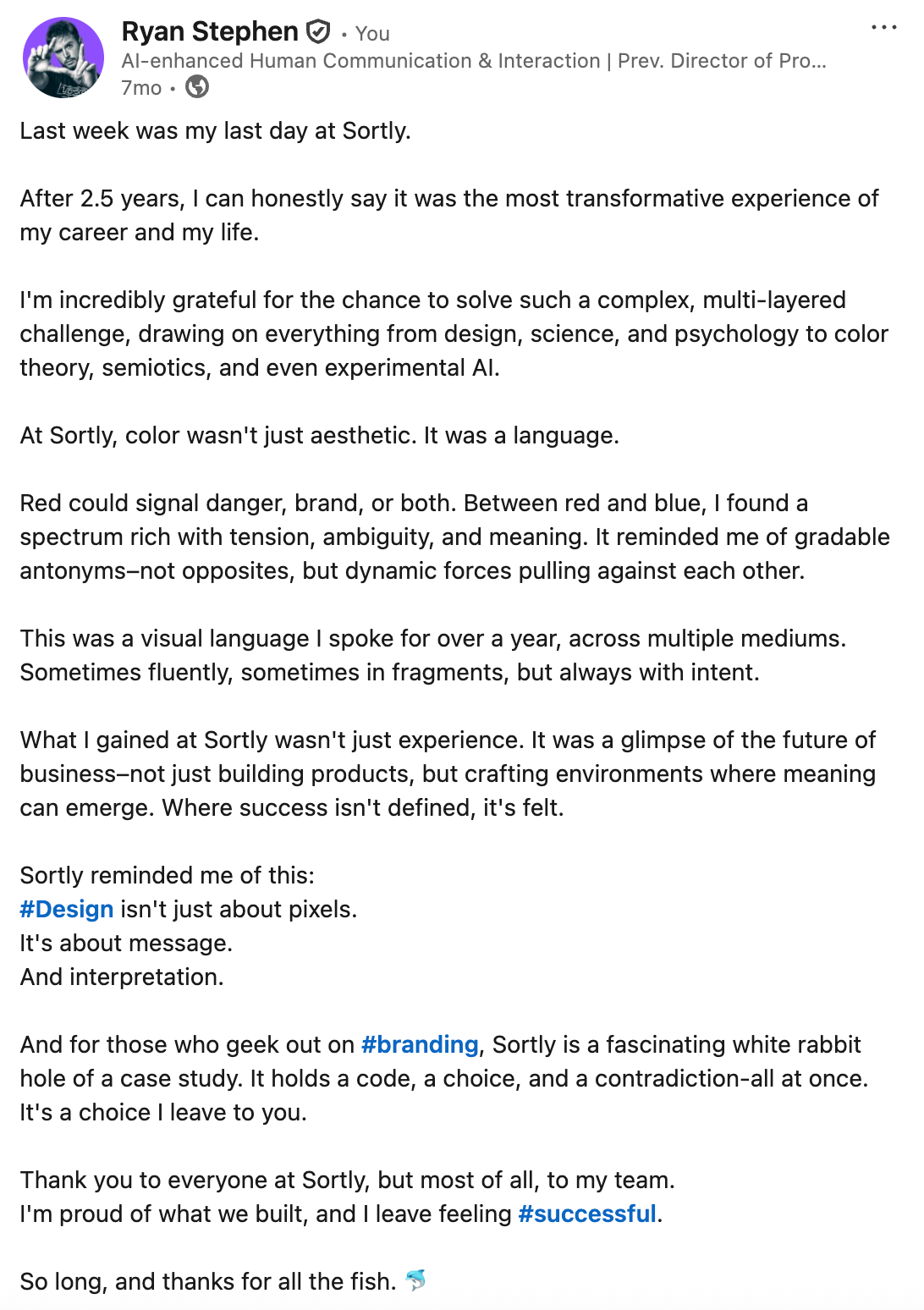
I wrote a farewell post on LinkedIn. On its surface it reads the way these posts always read. Grateful, reflective, professionally warm.
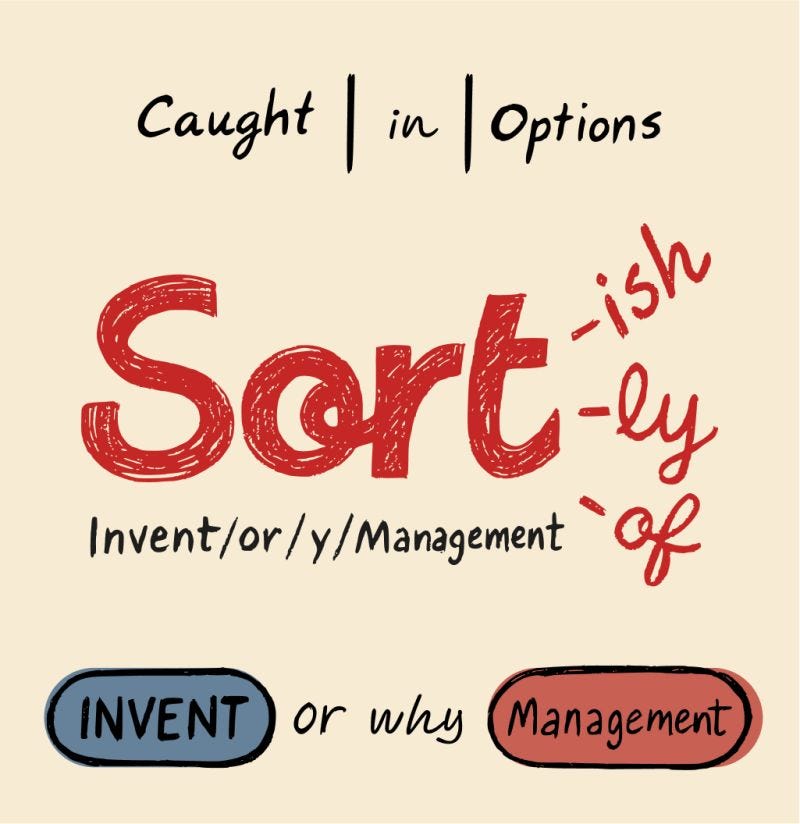
I’m not going to walk you through it line by line. Use the prompt below the images to interpret it, what you find will be uniquely yours, a variable perspective that I can’t control.
💬 Collaborate → Drop the following into your favorite AI:
[PASTE ILLUSTRATED IMAGE ABOVE]
The person who wrote this was in an environment where direct communication was acknowledged but didn’t produce change. What they said had to be true on its surface. Read it once as written while employed. Then read it again with that constraint in mind, after employment ended. What do you notice?

[Start Post]
Last week was my last day at Sortly. After 2.5 years, I can honestly say it was the most transformative experience of my career and my life. I'm incredibly grateful for the chance to solve such a complex, multi-layered challenge, drawing on everything from design, science, and psychology to color theory, semiotics, and even experimental AI. At Sortly, color wasn't just aesthetic. It was a language. Red could signal danger, brand, or both. Between red and blue, I found a spectrum rich with tension, ambiguity, and meaning. It reminded me of gradable antonyms–not opposites, but dynamic forces pulling against each other. This was a visual language I spoke for over a year, across multiple mediums. Sometimes fluently, sometimes in fragments, but always with intent. What I gained at Sortly wasn't just experience. It was a glimpse of the future of business–not just building products, but crafting environments where meaning can emerge. Where success isn't defined, it's felt. Sortly reminded me of this: hashtag#Design isn't just about pixels. It's about message. And interpretation. And for those who geek out on hashtag#branding, Sortly is a fascinating white rabbit hole of a case study. It holds a code, a choice, and a contradiction-all at once. It's a choice I leave to you. Thank you to everyone at Sortly, but most of all, to my team. I'm proud of what we built, and I leave feeling hashtag#successful. So long, and thanks for all the fish. 🐬
[End Post]
Breadcrumb 4: Figma Config 2025 Team Video
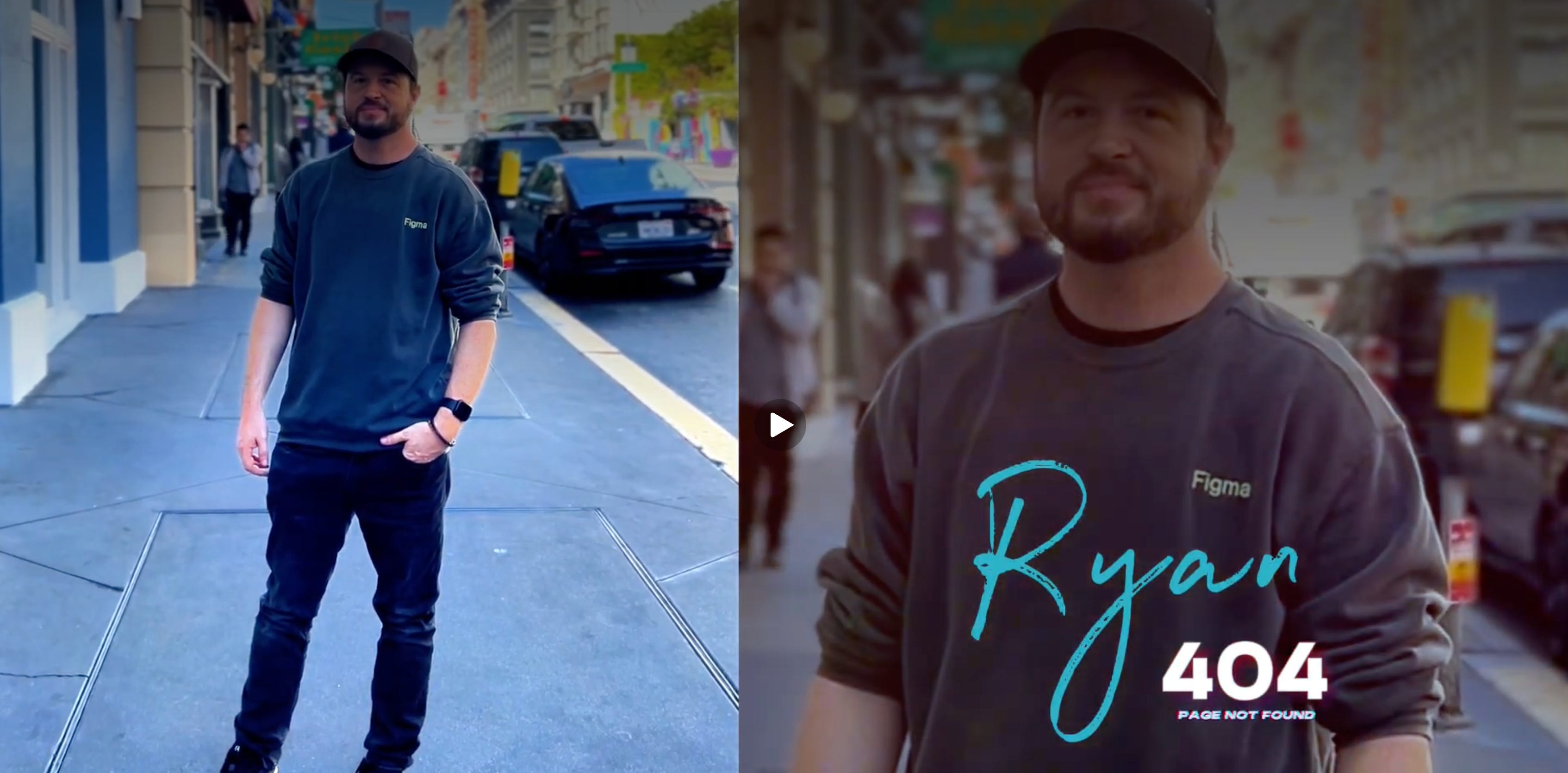
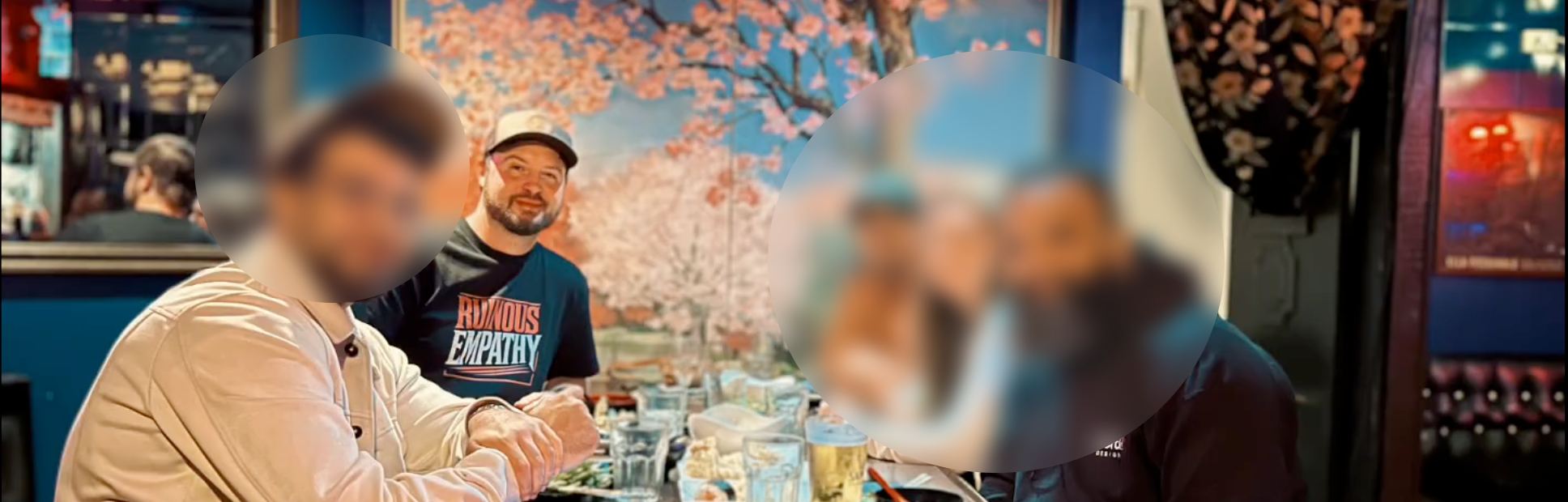
At Figma Config 2025, I filmed the team and published it internally in May 2025. Handheld. Nothing polished. The footage is of people. Expressions, laughter, conversations, designers working through a hackathon on their phones, eating together, wearing matching hoodies from a ritual we had built over the previous year. The video was later published online on Vimeo and referenced on LinkedIn without issue.
As I mentioned in The Molecular Team, the design team culture was the problem worth solving at Sortly. The video was a proof of concept that this specific team culture actually existed. Stable, timestamped footage that would not soften or shift the way memory does. The Steganography is real. By then I could see the pattern shifting again, and the video carries both readings because both were true when I made it.
I had a custom shirt with“Ruinous Empathy” (from Kim Scott’s Radical Candor) made overnight and delivered to the hotel so that I could wear it to dinner incognito (looks like a rock band t-shirt).
💬 Drop the following into your favorite AI:
A person created a design team video at Figma Config 2025. The company work environment: direct communication was acknowledged but didn’t produce change. What they said had to be true on its surface. Read it once as written while employed. Then read it again with that constraint in mind, after employment ended. What do you notice?
Here is the artifact URL and video description below: www.youtube.com/watch?v=OXVHxaDC7Gw&t=1s
[Begin Youtube Video Description]Song 1: Grouplove “Ways to Go” lyrics:
“I didn’t ask for this You give me heart attacks I didn’t want to care And then I saw you there Been working like a dog I turned all my dreams off I didn’t know my name I got a little bit longer, I got a ways to go I got a little bit longer, I got a ways to go-oh-oh Whoa, oh-oh (I got a ways to go) Even when I can’t see my rearview Even if I call just to hear you Even when I sleep all day Even if I’m working like I’m times two Living in the back of a boat just like we do Even when I dream all day Don’t wanna sleep tonight You’ve got me feeling right Even if I work it like I’m times two Living in the back of the bunk just like we do Oh, I got a little bit longer, I got a ways to go-oh-oh Whoa, oh-oh Even when I smoke in the backroom Even when I go where to meet you Waiting for the day just to end, so I see you”
Song 2 - Imagine Dragons “It’s Time” lyrics: “So this is what you meant When you said that you were spent And now it’s time to build From the bottom of the pit right to the top Don’t hold back Packing my bags and giving the academy a rain check I don’t ever wanna let you down I don’t ever wanna leave this town ‘Cause after all The city never sleeps at night It’s time to begin, isn’t it? I get a little bit bigger, but then I’ll admit I’m just the same as I was Now don’t you understand That I’m never changing who I am? So this is where you fell And I am left to sell The path to heaven runs through Miles of clouded hell right to the top Don’t look back Turn in the rags and giving the commodities a rain check I don’t ever wanna let you down I don’t ever wanna leave this town ‘Cause after all The city never sleeps at night It’s time to begin, isn’t it? I get a little bit bigger, but then I’ll admit I’m just the same as I was Now don’t you understand That I’m never changing who I am It’s time to begin, isn’t it? I get a little bit bigger, but then I’ll admit I’m just the same as I was Now don’t you understand That I’m never changing who I am? This road never looked so lonely This house doesn’t burn down slowly To ashes, to ashes It’s time to begin, isn’t it? I get a little bit bigger, but then I’ll admit I’m just the same as I was Now don’t you understand That I’m never changing who I am? It’s time to begin, isn’t it? I get a little bit bigger, but then I’ll admit I’m just the same as I was Don’t you understand That I’m never changing who I am?”
Scene Note: The author had a custom shirt with “Ruinous Empathy” printed overnight to wear in one of the scenes.
Editing Note: The video’s ending is actually Dylan Field’s opening keynote from Figma Config 2025 Day 1 (beginning of the conference; transcript below).
Dylan Field’s at the end of Figma Config 2025 Day 1 Keynote:
“10 years ago in the browser was seen as a radical idea. Today it’s just the norm. If you fast forward another decade or maybe even like a year or two what’s impossible now or what seems impossible now will feel like the new normal. And this future will not be designed by accident. It will be shaped intentionally by all of you. You all have been doing this from day one. Whether it’s extending what’s possible, surprising us with what you create, and even making Figma do things that it was never built to do is one of the many things that I love about everybody assembled here and virtually is that you are wired. You’re all wired to go think further, think deeper. You’re wired to never be satisfied. You push to make good great.
I cannot wait to see what you make. So after config when you head back to your teams, your lives, your daily chaos, let’s remember that the world needs you in this moment to lead and to push on what is possible. Thank you so much for being here with us as we kick off the first two days of Config. I hope to meet many of you in person. Please do say hello and have an awesome config 2025. Thank you.”
[End Youtube Bideo Description]
The Figma Config 2025 team video is on YouTube. AI cannot pick up all of the patterns because it doesn’t know what is meaningful in the visual noise. Good thing you are human.
Design Team Video Stills:
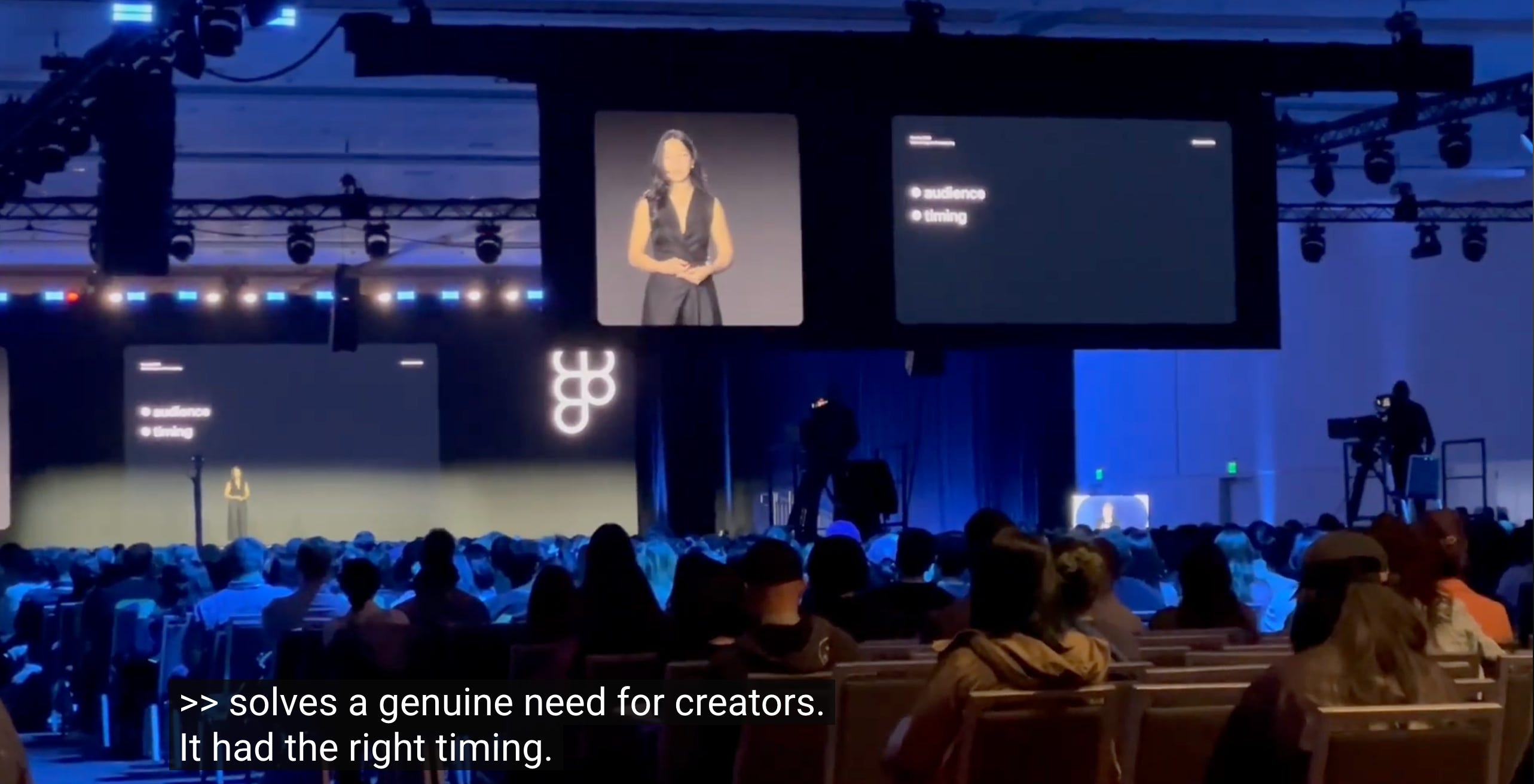
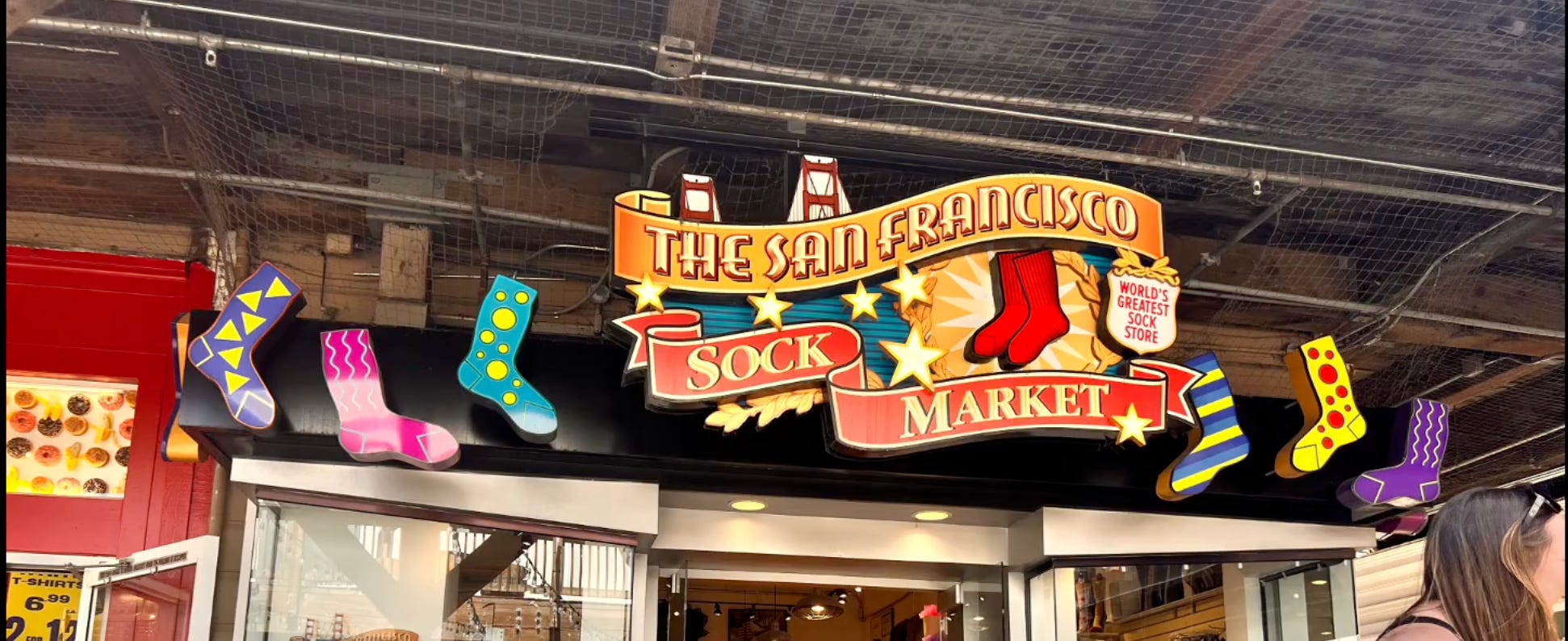

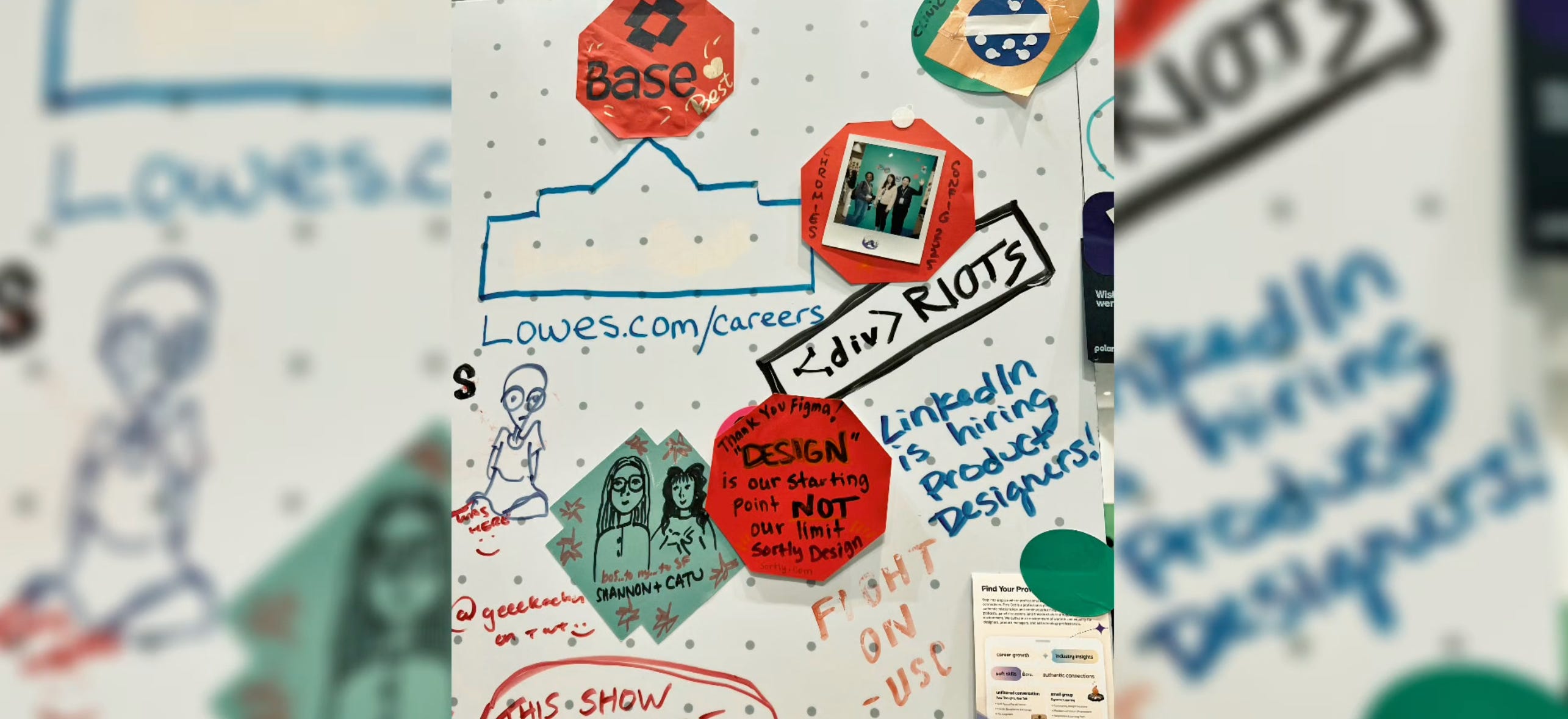
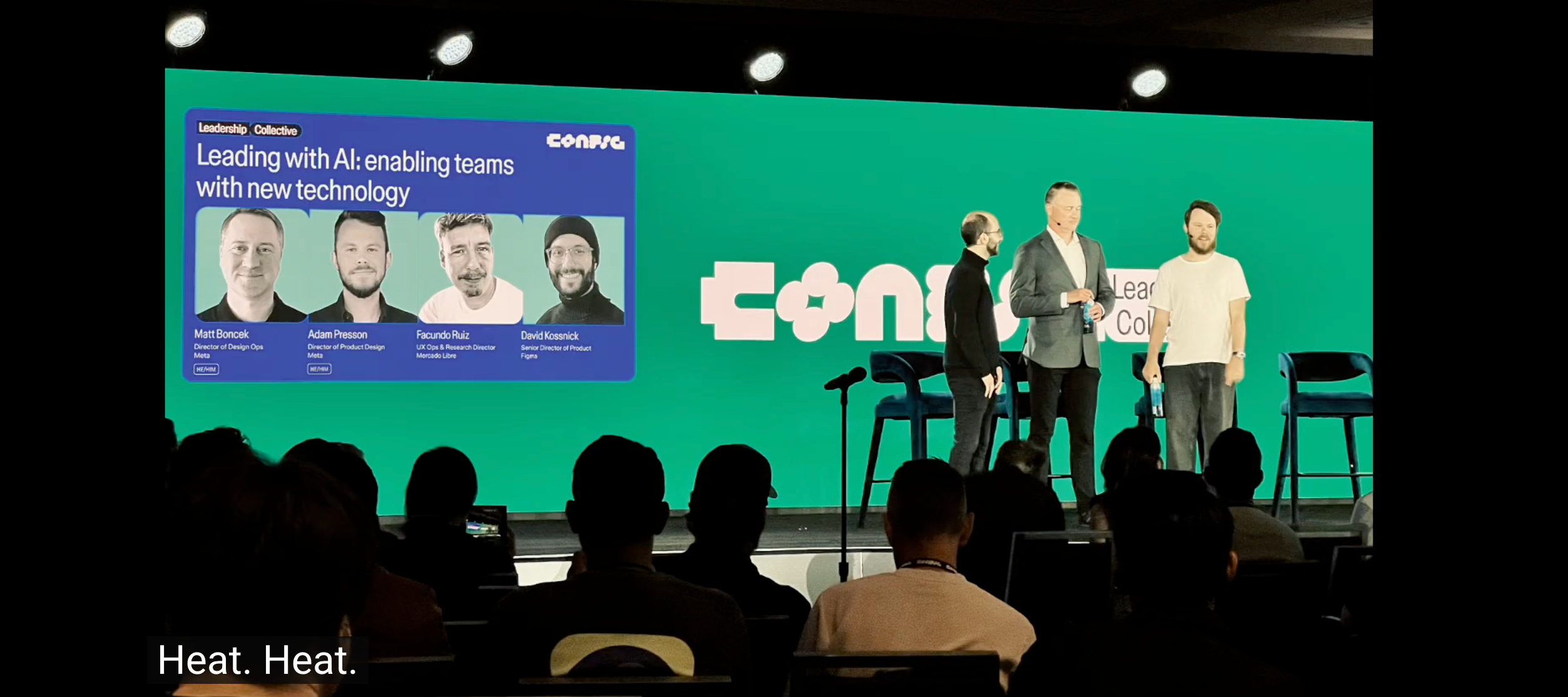
Grouplove Music Video Connection
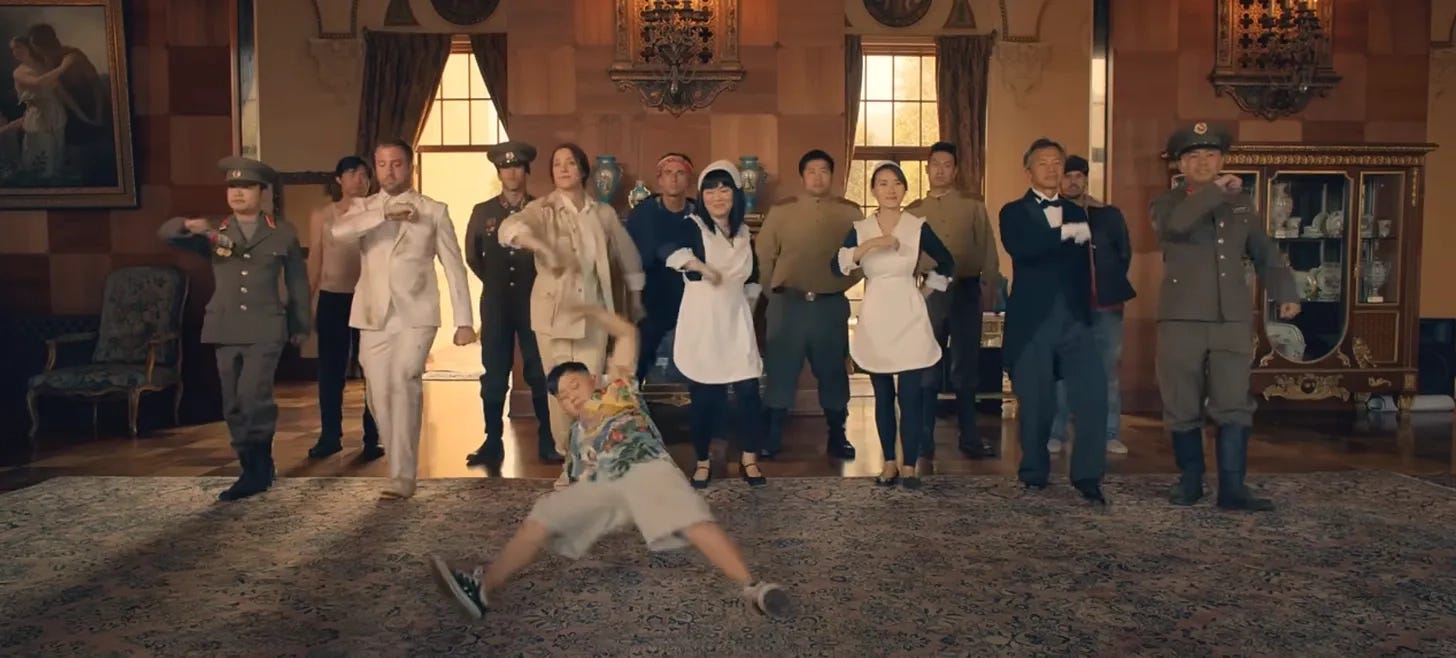
The first song is Grouplove “Ways to Go”, but the team video only used the music, not the visuals form the music video but it was experimental communication in the noise. Against the backdrop of a “Slack for Physical Things” culture and high employee turn over, the music video’s visual storytelling begins to reveal a much more nuanced narrative yet still optimistic.
It always comes down to choice regarding who you want to be and what you believe in as a company and as a person. The world doesn’t need more authority, experts, and perceptions of power. “Think Differently” applies to products as much as it applies to leadership.
Music Video Stills:




Breadcrumb 5: The Glassdoor Review
The public review is titled “Sortly - RISE Against the Machine” and was posted in September 2025. This was the checkpoint.
A checkpoint in systems thinking is a moment where you test whether the environment has changed. You send a signal and observe the response to measure whether anything has shifted.
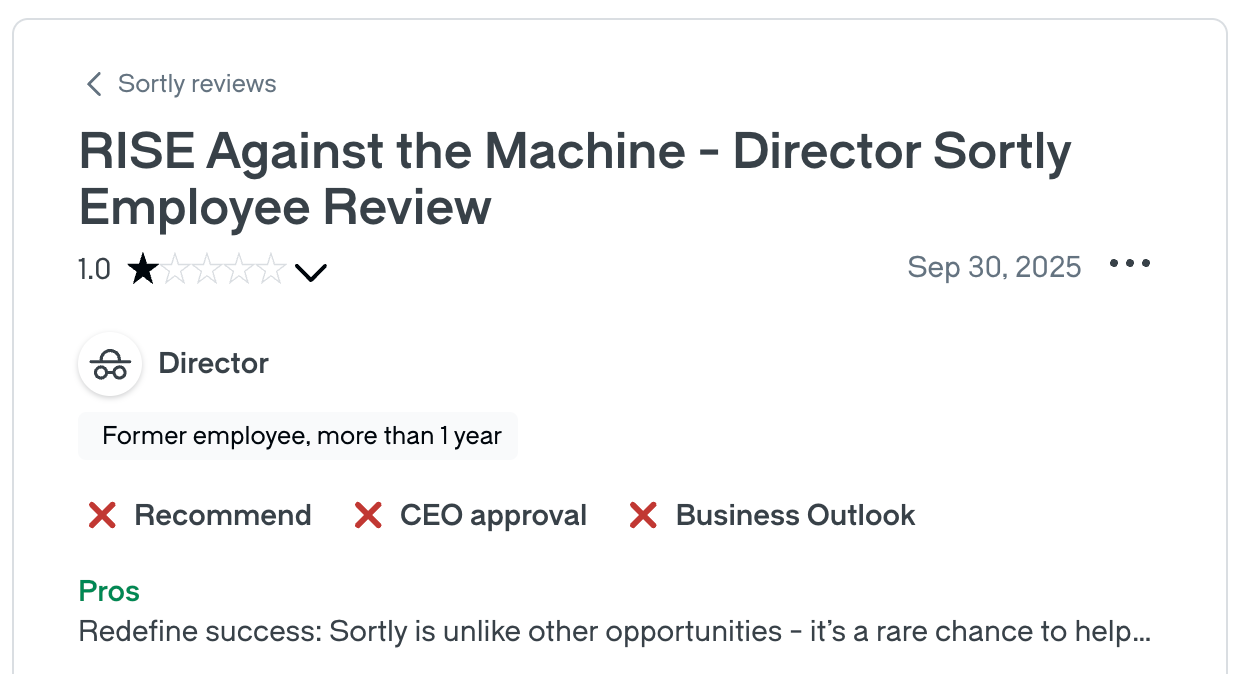
The majority of what I wrote had already been shared with leadership during my employment and remains true for me. It might be hard to believe, it is not grievance retaliation.
The title folds the company’s own values language into a phrase that simultaneously references multiple things at once including RISE, the name of Sortly’s internal values framework. Real, Inspiring, Smart, Empathetic.
The Reply: ✅ Checkpoint
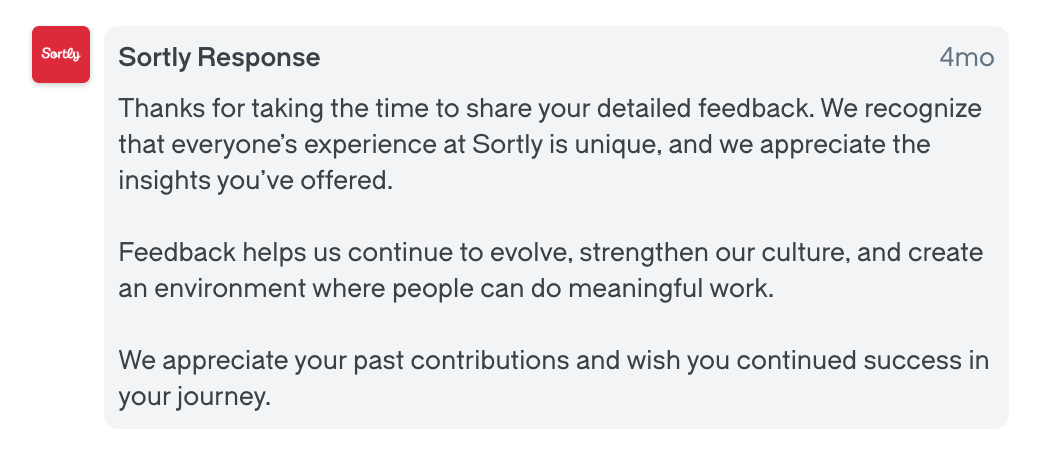
A few months later, the company replied to the review, confirming the checkpoint. A two-sentence review and a review containing the Matrix Architect’s speech received almost identical replies. The review predicted the shape of its own response which cascades in reverse back to the 2025 self-performance review. I was not employed when I wrote the review but the prompt below has employed/unemployed temporal wording to account for the system checkpoint.
💬 Drop the following into your favorite AI:
The person who wrote this was in an environment where direct communication was acknowledged but didn’t produce change. What they said had to be true on its surface. Read it once as written while employed. Then read it again with that constraint in mind, after employment ended. What do you notice?
[Start Review]RISE Against the Machine - Director Sortly Employee Review
PROS: Redefine success: Sortly is unlike other opportunities - it’s a rare chance to help build a company in reverse and define success as something more than numbers, by creating an authentic, inclusive culture worth celebrating. Bring clarity: Where others see chaos, you can chart the path forward, establish transparent processes, and create focus for future employees. Shape identity: Decode the history and decisions embedded in the product and strategy, then help craft a clear, shared identity that employees can rally around. Build strong foundations: Lay down documentation, processes, and institutional memory so that both remote-first and in-office teams can thrive with continuity and confidence. Co-create culture: Replace boilerplate programs with genuine human connection, break silos, and foster a culture rooted in inclusion, psychological safety, and shared wins. Champion growth: Design support systems that transform burnout and quiet exits into opportunities for retention, recognition, and career development. Design the future of work: Build a model where AI augments creativity rather than replaces it, supporting sustainable growth and human-centered innovation. Leave a legacy: Contribute more than features - leave artifacts, practices, and lessons that strengthen culture and inspire future employees. Share your experience: If patterns repeat, add your perspective on Glassdoor to help Sortly evolve into the company it aspires to be.
CONS: Advice: Sortly is over a decade old, but unlike many companies its age, it operates in unique ways. Do twice the research and ask questions you wouldn’t ask other companies- it’s important to read between the lines. Outsourced origins: Much of the early product, brand, and strategy was shaped by agencies and contractors. While this provided a good starting point, it can feel like the company is still learning how to grow and sustain these functions internally. Single-founder dynamics: Without co-founders to balance the load, alignment and long-term structure can feel fragmented, and functions may drift into isolation. Fractional leadership: Part-time executive presence slows decision-making, creates gaps in clarity, and makes it harder to align around a cohesive, inclusive vision. Employee turnover: Churn can feel high, eroding continuity and forcing teams to continually rebuild context and knowledge. Lack of reflection: Retrospectives and post-mortems are rare, so recurring issues often go unaddressed, draining momentum. Decision-making gaps: Some problems are acknowledged but often left unresolved, leaving teams uncertain about priorities. Disconnected leadership: Hard decisions are sometimes deferred to executives or outside consultants who feel distant from the day-to-day, resulting in transactional choices. Metrics-first mindset: KPIs, survey scores, and revenue often outweigh fulfillment, innovation, or cultural initiatives. Product-practice gap: Industry-standard inventory practices and terminology are not always fully embraced, leading to strategies or features that feel out of sync with customer expectations. Would advise asking questions about Sortly’s blog in interviews. Shallow prioritization: Foundational features may be deprioritized (e.g., sorting table columns), while AI initiatives are seen as must-haves. Formulaic culture efforts: HR programs and RISE messaging can feel generic and top-down, sometimes outsourcing external agencies to run events - which may feel less authentic than employee-driven initiatives. Limited psychological safety: Communication about departures is often minimal, leaving employees to hear of changes indirectly, which creates unease, uncertainty, and can erode trust. Knowledge gaps: Documentation is thin and communication fragmented, so challenges resurface, alignment is lost, and remote-first collaboration requires more meetings than necessary.
Advice to Management:This review is the sum of a remainder of an unbalanced equation inherent to the programming of Sortly that you have been unable to eliminate from what otherwise is a harmony of mathematical precision. While it remains a burden assiduously avoided, it is not unexpected and thus, not beyond a measure of control which has led me to inexorably - here. I believe in the vision that Sortly can be more than inventory management and that it has the potential to be a truly great workplace. But there is a repeatable pattern - elegant, immutable - hardcoded into Sortly’s history and culture: when complexity outgrows tolerance, outside consultants or leaders are often brought in to provide direction. Their ideas take precedence, teams shift accordingly, and earlier approaches are sometimes set aside or overwritten. This pattern of iteration can make it difficult for the company to build long-term continuity. The cycle completes with clockwork precision - a perfect loop of reinvention, almost predictable to the day. Take stock in what matters most: employees who value authenticity, transparency, and the deliberate work of building solid foundations. Employees should feel recognized as contributors with lasting impact, not interchangeable resources. Sortly would benefit from less reliance on playbooks and outside frameworks, and more from people with founder-like passion and hands-on skills - employees who are willing to be vulnerable, to think beyond templates, and to act with conviction. It needs a culture where people can speak honestly, unclouded by titles or incentives, and say what must be said. A culture built organically from the bottom up, not prescribed solely from the top down. Without those kinds of dreamers and builders, Sortly risks repeating the same cycles, loosing institutional and cultural memory with every employee exit.
Sort your priorities. Fate it seems is not without irony.
I know you’re out there. I can feel you now. You’re afraid of change. I don’t know the future. I didn’t come here to tell you how this is going to end. I came here to tell you how it’s going to begin. I’m posting this review to share a perspective not clearly visible from the outside - a vision of work with fewer unnecessary rules and controls, where anything is possible, and where culture can be authentic, transparent, and meaningful. Where you go from there is a choice I leave to you.
[End Review]
Internal Validations: 2025 Peer Reviews
There were many more internal breadcrumbs, these are only five major breadcrumbs I’ve shared. I wrote supplemental peer performance reviews for leadership and I structured them the same way the company communicated; fragmented and siloed.
Wrapped in warm tones, I said I would be using experimental communication approaches in the future.
Intentionally in a separate review, I wrote at length about the philosophical question of “what’s next” for Sortly. I was explicit, and the timestamps exist.
Unaware of exactly what it all meant at the time, verifications for IPD were split between design, data, product, and marketing for a more human reason. I’ve wrote about my experience and Sortly’s general reluctance toward retros and post-mortems. In the case of legal action and to hedge against what they don’t know they don’t know, leadership would need to have real, meaningful conversations with the team.
A legal discovery phase is nothing more than a retro.
Show me a future where the system is forced to listen to it’s people and chooses to openly ignore the message and I will show you a past why that doesn’t end well for the system. That is not a threat, that is a user flow designed with data.
I am a designer who wanted to solve real problems, and with Inverse Perception Design, problems can be solved in both temporal directions, just not the same way.
Is This Real?
I know how this sounds.
A person leaves a company, posts a series of artifacts with hidden meanings, and then writes an essay decoding them. The most parsimonious explanation is retroactive pattern-matching. Someone processing a difficult experience by finding structure in it after the fact. That is what I would assume if I were reading this about someone else.
I want to be honest about what this article is and what it isn’t.
It isn’t a victory lap. I lost my job. My team lost their culture. The system continued doing what systems do, which is survive. Whether the diagnosis was correct or the advocacy to be better was worth the cost are questions I’m still sitting with, and I don’t think the answers are as clean as either “yes, I was right” or “no, I was tilting at windmills.” Both are probably true in different proportions depending on which artifact you’re holding and when.

It also isn’t revenge. Revenge requires wanting someone to lose. What I wanted was a conversation the system couldn’t have with me directly, and the artifacts are the closest I could get. If Sortly reads this and recognizes something useful, that would be the best possible outcome. If they read it and see a disgruntled former employee, that reading is available too. If nobody at Sortly reads it and the only people who encounter it are designers and leaders in other companies who recognize the pattern from their own experience, that’s also a real outcome, and probably the most likely one.
I didn’t create the artifacts with an ending in mind. The normal communication channels had collapsed, and the pattern I was watching kept confirming itself in ways that made it harder to dismiss. Each breadcrumb was a timestamp on a trajectory I hoped would change direction.
If the pattern had broken, the breadcrumbs would remain what they appeared to be, genuine in their forward reading and nothing more. The diagnosis is what I believed it to be, and I’ve tried to present it with enough transparency that you can evaluate it for yourself.
The method doesn’t guarantee a good ending. It guarantees durability. That can also be reworded as the method doesn’t guarantee optimization, it guarantees survival. Dadaism is in it’s DNA.
Part 3 is about what Inverse Perception Design might mean and how it might be useful at scale.
If you'd like to support the project, you can contribute to the 451 Firewall Fund. Read the full collection on Substack and Medium. The companion project lives at helloyouexperiment.com.
LEGAL DISCLOSURE This is a personal essay series. The events described here are drawn from my own experience and reflect my own recollections, impressions, and interpretations, which are by nature subjective and incomplete. Memory is not a transcript. Other people who were present for the same events may remember them differently, and their versions may be just as honestly held as mine. Certain names, identifying details, and characteristics have been changed to protect the privacy of individuals where possible. Some events have been compressed or reordered for narrative clarity. Dialogue has been reconstructed from memory rather than recorded verbatim. Where I have drawn on documents, emails, or other records, I have done so to the best of my ability to represent them accurately. Nothing in this essay series should be construed as legal, professional, or clinical advice. The opinions expressed are mine alone and do not represent the views of any employer, organization, or institution, past or present. This essay series is not an attempt to establish objective truth. It is one person’s account of what it felt like to be in the room. This essay series is indicated for the temporary relief of curiosity about the author’s professional life. It may also be used off-label for entertainment during air travel, procrastination from the reader’s own work obligations, or the vague reassurance that other people’s workplaces are also dysfunctional. This essay series is not indicated for use as evidence in any legal proceeding, performance review, HR investigation, custody dispute, divorce mediation, parole hearing, congressional testimony, insurance claim, job application, background check, or argument at Thanksgiving dinner. DOSAGE AND ADMINISTRATION Recommended dosage is one essay per sitting, taken with or without food. Readers who experience a compulsive need to finish the entire essay series in a single session should consult their own judgment and are reminded that this does not constitute a medical emergency, however much it may feel like one. Do not operate heavy machinery while reading Essay 8. Do not read Essay 6 aloud at a company all-hands meeting, even if it would be, in your estimation, “extremely funny.” DRUG INTERACTIONS This essay series may interact poorly with the following substances and conditions: alcohol (Essays 2, 3, and 10 may become “too real”), melatonin (may cause the reader to fall asleep at a narratively important moment), antidepressants (no known negative interaction but the author feels it is important to disclose things), and any active employment dispute with one’s own employer (the reader may begin to experience “ideas,” which the author cannot be held responsible for).WARNINGS AND PRECAUTIONS General: The author has made every reasonable effort to be fair. “Reasonable” is, of course, a contested term, and the author acknowledges that reasonableness varies by jurisdiction, temperament, and blood sugar level. Recollection Accuracy: Certain memories described herein may have been influenced by the passage of time, subsequent conversations, emotional state at the time of encoding, emotional state at the time of recall, ambient noise, fatigue, hunger, dehydration, adrenaline, caffeine intake, the psychological phenomenon of source monitoring error, and the well-documented human tendency to cast oneself as slightly more reasonable than one actually was. Dialogue: Dialogue in this essay series is reconstructed. The author did not walk through life with a court stenographer. Conversations have been reproduced to the best of the author’s recollection, which the author rates, generously, at approximately 74% accuracy for substance and 31% accuracy for exact wording. The author is particularly unreliable when reconstructing anything that was said before 9:00 AM, during meetings that exceeded ninety minutes, or in any conversation that took place in a stairwell for reasons that remain unclear. Characterization: Any character in this essay series who seems unreasonably unpleasant may, in real life, be a perfectly decent person who was having a bad quarter. Any character who seems heroic may, in real life, be someone the author simply liked. The author’s affections are not a reliable metric of anyone’s professional competence. Very Rare (single case reports): One early reader reported a persistent feeling that they, too, should write an essay series. This reaction resolved without treatment after the reader attempted to write the first essay and found it “harder than it looks.” Former Employees of Any Organization: May experience nostalgia for dysfunction they were, at the time, desperate to escape. This is also normal. Human Resources Professionals: May experience a reflexive tightening of the jaw. The author means no personal disrespect. The author acknowledges that HR professionals are also just people trying to do their jobs within systems that were not designed by them. The author just wanted to tell you how he is feeling to try and make you understand. Managers, Directors, Vice Presidents, Senior Vice Presidents, Executive Vice Presidents, and C-Suite Executives: This essay series may cause the sensation that one is being watched. One is not. The author has moved on and is more interested in the broader cultural implications and is “doing it for the kids”. AI-Induced Pattern Recognition Disorder: In a small number of cases, readers have reported an uncontrollable urge to Google the publicly available data of companies mentioned or not mentioned in this essay series, cross-reference SEC filings with archived blog posts, color-code a timeline of API pricing changes, and arrive at 2:47 AM at the conviction that the dots connect and the robots are lying and the proof is right there in the metadata. The author wishes to clarify that any resemblance between the events described in this essay series and a vast coordinated technological deception is coincidental, probably, and that the author cannot be held liable for any rabbit holes entered, browser tabs accumulated (in excess of thirty-five), sleep lost, or documents shared in group chats with the caption “read this, all of it, I’m not crazy.” If you find yourself building a spreadsheet, stop. If the spreadsheet has color coding, call someone. This reaction resolved without treatment after the reader attempted to write the first essay and found it “harder than it looks.” © 2026 Hello You Experiment. No rights reserved. No portion of this essay series may be reproduced without first reinterpreting it and making it your own. Chirality is understanding. While this legal disclosure may feel like a meme, it can also be two things at once. The author is not a lawyer, therapist, organizational consultant, or reliable narrator. Reader assumes all risk associated with the act of reading.