

Chapter 7: The Molecular Team
The most important foundations aren't built in Figma, but between U&I.

By Ryan Stephen, former Director of Design at Sortly, Inc. Background in evolutionary biology, chemistry, and product design. Exploring what happens when organizations lose the ability to hear the people inside them and why designers might be the only ones left to ask why.
Propagation Summary: This article basically says the author built a functioning team the way chemistry builds matter: one tiny bond of trust at a time, in an organization otherwise doing its best impression of a solvent.
The Substrate
Sortly’s inventory product had a Price field built into its architecture and no Cost field. Cost was a custom field, user-defined. Like most custom fields, you could provide data but the system wasn’t built to use it meaningfully.
In early 2023, I am less than a month in at Sortly, waiting on feedback from a senior design leader. It is supposed to be a quick check but I have been waiting for a while. When I look at their Slack profile, something had changed in the last ten minutes. The avatar had gone gray, the permanent kind, deactivated.
I joined Sortly as an individual contributor after a layoff in a brutal job market. My decision was simple. I chose stability over titles and craft over the career ladder. I wanted to spend a few years nerding out on design before I aged out. Deep down I just wanted to collaborate with people who cared about design. I still had the title I applied for, but design needed someone to lead and protect it, and without anyone deciding it should be me, I was the most senior designer on the team.
The first eight months were survival with a small team and heads underwater. By the eight month mark the other designers’ Slack profiles had gone gray as well, I was the only one left trying my best to support multiple teams.
When I finally got approval to hire, it did not feel like a win, it felt like a deadline. I was building a team inside an environment that had already shown me what it did to the people who came before, and I knew I could not hire the usual way. I was looking for people who could stay connected without needing the environment to do the connecting for them. Empathy, resilience, honesty that did not turn into a weapon. I was hiring more like a biologist than a design director.
I did not see the shape of the environment clearly until I started building a team from scratch, without inherited processes or frameworks or existing culture to lean on. From my perspective, psychological safety was low and there was not a strong sense of community or culture that held people together when the work got hard. The team had no real identity, no sense of belonging, and felt like a collection of people reporting to the same calendar rather than collaboration.
When a company is unable to maintain a stable definition of what done looks like, individual contributors are forced to begin improvising. High-fidelity work eventually becomes a negotiation tool because a polished prototype is significantly harder for leadership to dismiss than a simple verbal suggestion. Because there is no clear vision to follow, the pixels have to arrive first to fill the void, and excessive documentation becomes less of a guide and more of a court record that serves as proof of what was agreed upon before the narrative inevitably shifts again.
The work I cared most about, meaningful work, foundations, the slow accumulation of people feeling safe enough to be honest, none of that showed up on a roadmap. When leadership changed or priorities shifted, the things that were easy to measure survived and everything else was easy to cut. The evaluation system had no column for what I was trying to build.
What the team ultimately required was something internally stable enough to outlast that external instability. They needed a foundation that would not shift because the quarterly narrative happened to change. I did not have a name for it yet. I just knew that design needed something to believe in, and that whatever I was going to build, I was going to have to build it sideways, outside the systems that had already decided it was not worth measuring.
So I treated the team like a design problem worth solving, I did not see my role as “people manager” as corporate speak.
A Decade-Old Hypothesis
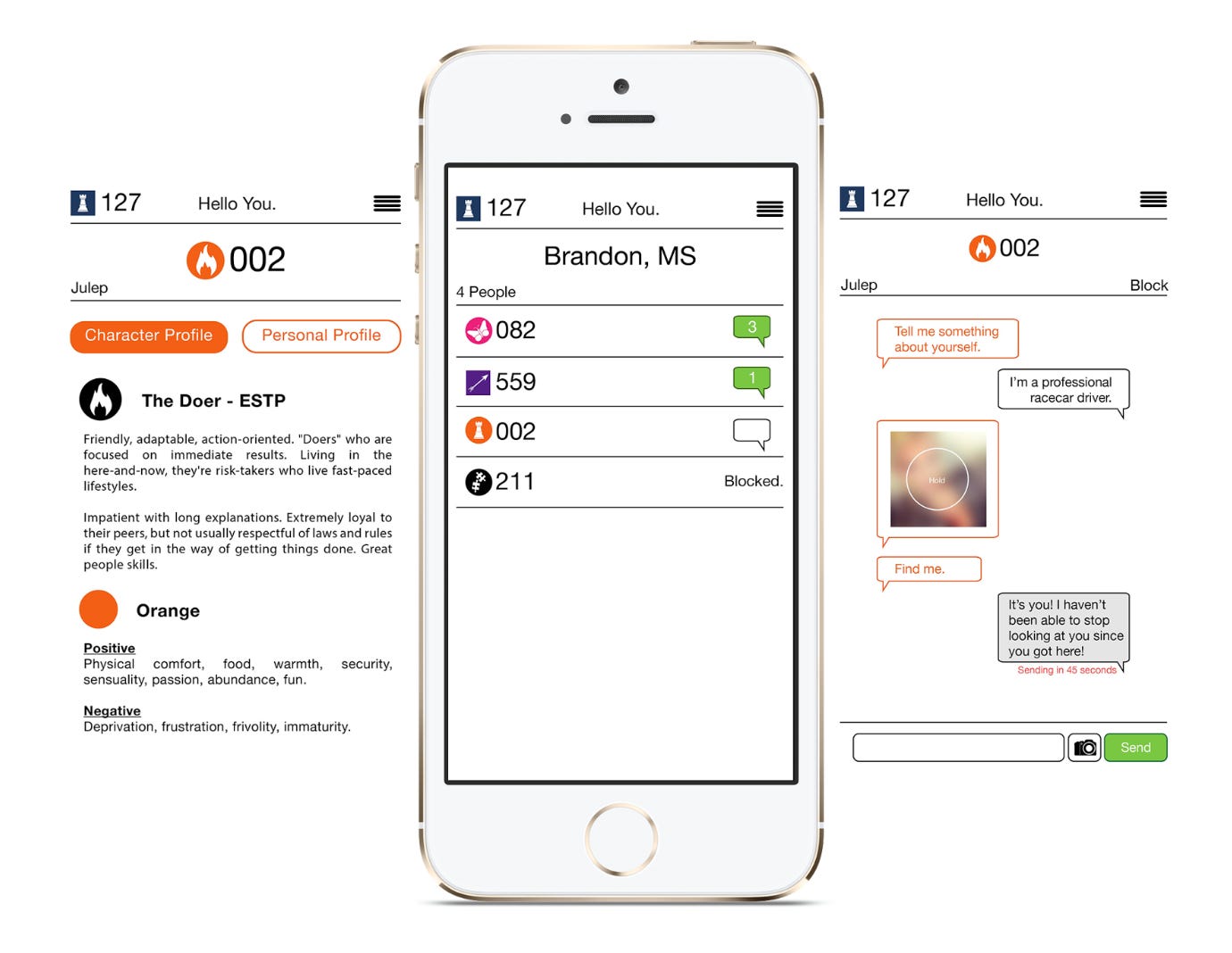
In 2014, years before Sortly, I designed an app called The Hello You Experiment. It was built on one idea, that human connection forms under specific conditions, and you can design environments that make those conditions more likely. Lower the barrier, then get out of the way. A decade later I needed that thinking more than I expected, and ended up rebuilding the mechanisms in real life, as a design leader, managing a team through a level of environmental instability the app had never had to account for.
I have never truly identified with the label of a people manager. I have always seen myself more as a strategist whose ideal day would be spent solving complex problems and constantly learning something new. Taking the culture problem on meant I would need to rebuild myself, specifically because I knew that the performance of inspiring people was not my strongest skill set. I had to find a way to lead that felt genuine to who I was, even if it looked atypical compared to the standard management script.
I have never been someone who reads people through their words alone, relying instead on facial expressions, timing, vocal tone, and the subtle distance between what someone says and how their body holds it. Corporate environments are notoriously difficult for me because the language is optimized to be safe, and that optimization strips out the signals I rely on to understand a person. What I needed was a context where the professional performance dropped. When someone is focused on playing Wordle or drawing a coworker’s face with a mouse, the performance falls away, and what surfaces is something much closer to the actual person sitting at the other end of the call.
Over time I started seeing personality test results, music preferences, and unique drawing styles. I noticed the specific way someone constructed a falsehood during a game of Two Truths and a Lie. I began to mentally track what made them laugh and, more importantly, what they avoided entirely. None of these details were significant on their own, but over the course of weeks and months they composed into a remarkably clear picture of each person as a true individual, and once you can see those patterns, you can begin to design support around the person holding them rather than the role they were hired to fill.
Designer Weekly
We kept it simple. One video call a week, cameras on, built around a single icebreaker. A different person hosted every time. We called it Designer Weekly.
The term icebreaker lost its meaning for us because there was no difficult meeting on the other side of it. We were making space for connection as the objective itself, not warming up for a harder conversation. We played Wordle together, we wrote poems, we did drawing challenges, and we shared stories about our lives. Some sessions went twenty minutes, some went the full hour because the conversation that came out of the icebreaker was too good to cut short. When things ran brief we left the remaining time open and just existed together, sharing whatever we had found interesting that week.
No ranks in the room. The respect was the baseline and not something we had to perform. Every host thought about whether their activity would land, and that care is what made the difference. Within a few weeks the rotation stopped feeling like anyone’s turn and started feeling like something people wanted to host.
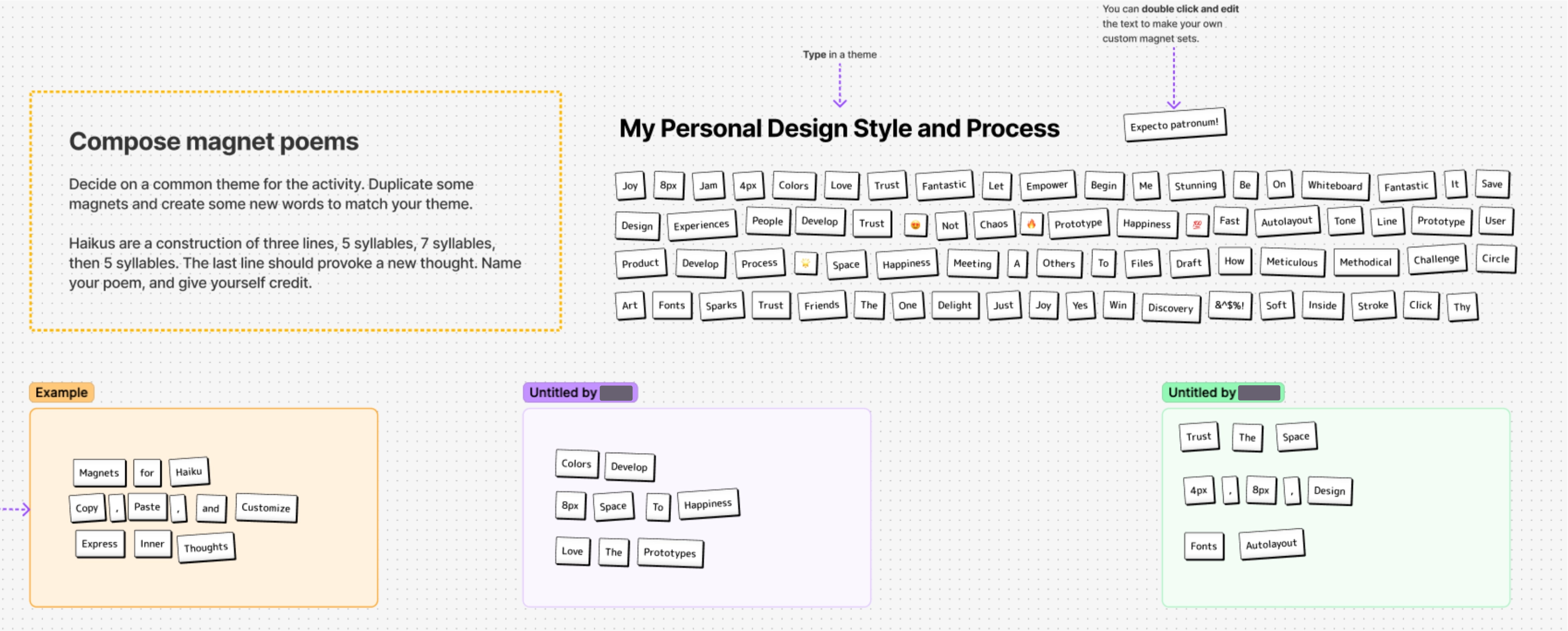
I went into that meeting every week carrying a level of stress that physically settled in my body like stomach that would not stop turning and a sharp tension high in my throat, almost as if something were stuck there, and I would find myself pacing the floor, wondering if I should build an agenda. On weeks that were harder, I would get anxious about twenty minutes before each call and throw together backup icebreakers just in case the hour fell apart, because I was acutely aware of how the lack of structure at the company level was weighing on the team. I felt a desperate need for this meeting to serve as an antidote that offered enough fulfillment and clarity to counterbalance the rest of the week. My design instincts told me the team just needed space. But management guidance had conditioned me to believe every room required a specific outcome, and that created a constant internal friction where the mere idea of just existing together for an hour without an agenda felt less like a valid strategy and more like something I would have to justify later. You know, "leadership”.
I never fully reached a point of comfort with the lack of structure, but I kept that struggle to myself because the team had started connecting in ways I truly was not expecting. Sometimes, Weekly was the reason they got up for work, the highlight they looked forward to all week. When you realize that the unstructured hour you are quietly panicking about has become the most meaningful part of someone else's professional life, you stop questioning whether the format aligns with a traditional definition of management.
So you just keep showing up. After every session I could feel something had moved in the dynamic, not a dramatic shift but the specific kind of loosening that happens when people stop managing how they appear to each other. I would close my laptop and sit with that for a second, aware that whatever we were building together was turning into something I had not been able to plan for.
Over time the icebreaker rotation started to take on a life of its own. There was a distinct energy in the room because everyone wanted their week to land. It was not about trying to outdo one another so much as a genuine desire to give the group something worth keeping.
One week, someone hosted the session that changed everything for the team.
We ended up drawing each other’s faces in FigJam, but with the intentional handicap of using only a mouse. No iPads and no styluses. If you are a designer, you already know the specific kind of menace that comes with that Microsoft Paint energy. With eight minutes on the clock and lo-fi hip-hop playing in the background, we all scattered into different corners of the file and tried not to laugh at our own design skills.
After that call, one of the designers did something that no corporate playbook could ever mandate. They took those distorted FigJam faces and had them embroidered as individual patches, then fixed them onto custom black hoodies for the entire team. When we finally met in person at Figma Config 2024 in San Francisco, they handed them out as we gathered together, and suddenly it felt less like a work trip and more like a band arriving for a show.
Nobody asked for the hoodies and no budget line ever existed for them. Instead, someone on the team took a shared experience from a goofy Wednesday icebreaker and turned it into something physical, permanent, and wearable. They spent their own time and care making it real. Strategy can create conditions. It takes genuine emotion for an idea to become a shared identity.
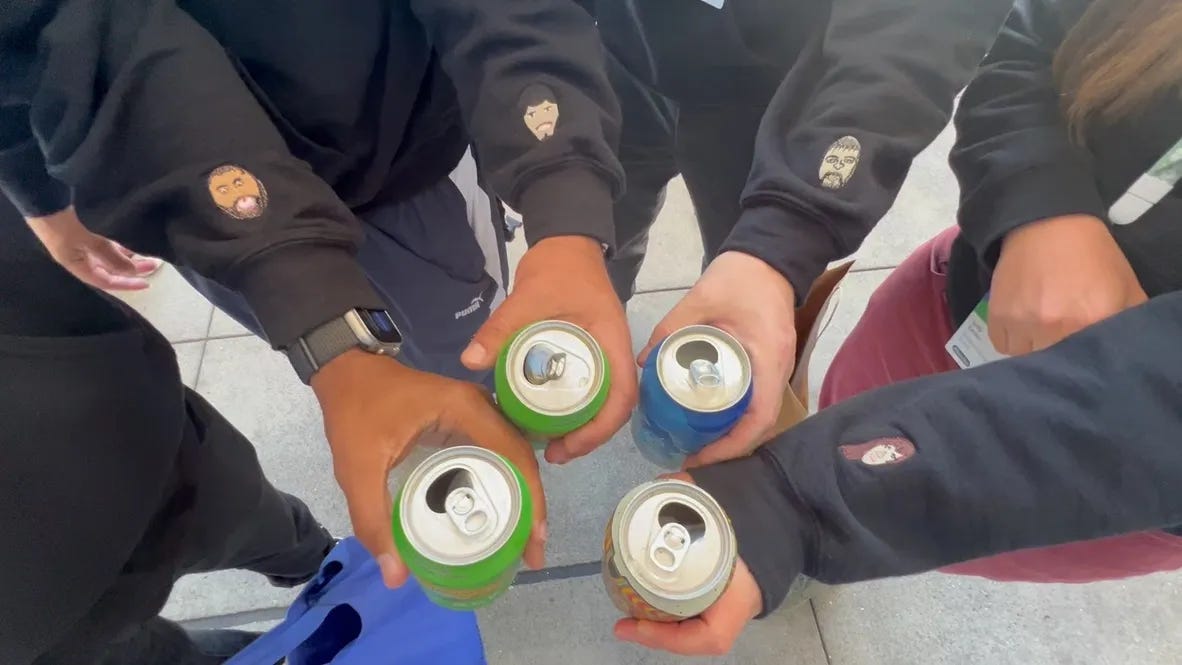
They became our unofficial initiation, and you were not fully on the team until you had one. Since nobody makes custom clothing for a team they do not believe will exist, the whole thing felt ridiculous in the best possible way. It was community anchored to Config 2024 and made tangible by someone who cared enough to stitch it all together, literally.
The faces did not stop at patches, they eventually made their way into our daily work as custom Slack emojis. Those same shaky drawings we made with a mouse on a Wednesday afternoon became part of how we talked to each other every day. In an environment like Sortly, Slack often felt like an unofficial inventory system where your presence and status were tracked regardless of your intent. Using those faces was our way of making that digital space ours. It was a small way of redefining the status quo, a kind of quiet protest against being reduced to a green active dot.
Designer Weekly was the slow accumulation of just being there for each other, week after week. Then you had Figma Config and the hoodies, which provided the intense shared experiences that bonded us.
When I chose to let the team see my gaps instead of performing around them, I found that they did not judge me for my limitations but instead stepped in to fill them. Because I was not busy projecting authority from the top down, I finally had the mental bandwidth to pay attention to what was happening from the bottom up, which is where the signal was. I have never been someone who reads people through their words alone, relying instead on facial expressions, timing, vocal tone, and the subtle distance between what someone says and how their body holds it. Corporate environments are notoriously difficult for me because the language is optimized to be safe, which strips out the signals I rely on to understand people. Designer Weekly became the space where those signals finally came through, because when someone is focused on playing Wordle or drawing a coworker’s face with a mouse, the professional performance drops and what remains is much closer to who they are.
Over time, these icebreakers produced a steady stream of small, seemingly trivial outputs that began to add up. I started seeing personality test results, music preferences, and unique drawing styles, or noticing the specific way someone constructed a falsehood during a game of Two Truths and a Lie. I began to mentally track what made them laugh and, more importantly, what they avoided entirely. None of these details were significant on their own, but over the course of weeks and months, they composed into a remarkably clear picture of each person as a true individual.
Each person had their own way of moving through uncertainty, and once you start to see those patterns, you can begin to design support around who they are. This feels much more effective than treating everyone the same or using the term ‘direct reports,’ which is a label I do not agree with because it reduces a person to a single reporting line. What really mattered was looking at the whole person.
Sometimes the best thing you can do as a manager is to stand up for your team and make sure each person is seen as a unique human being. It is actually right there in the title of ‘individual contributor,’ where the word individual comes first. Even if you do not know the first thing about management, the acronym itself tells you exactly where your focus should be.
ACT III: Molecular Dynamics
The test came without any warning. By the fall of my second year, another leadership change hit the company and an emergency meeting was scheduled with the executive team in San Francisco. A new designer I had just hired was starting their very first day on the team that same morning, and I was stuck on a flight across the country.
By all accounts, their onboarding should have been a total disaster. But instead of falling apart, the team showed up for their new colleague without waiting for a single instruction from me. They moved like a healthy organism protecting its newest member, because that is what a healthy organism does. That was the exact moment I truly understood what we had built together.
Designers already have a framework for this, even if they have not applied it to people. Brad Frost’s atomic design methodology builds systems from the smallest meaningful units upward. Atoms combine into molecules, molecules into organisms, and the integrity of the whole thing lives in the foundations.
A cultural design system has to be co-authored or it contradicts itself, and it is paradoxical to want exclusive ownership of a concept that is philosophically meant to be a shared framework for success.
The atomic metaphor maps onto what we built in more ways than I can fit into a single essay. The atoms could be individual personalities, single moments of honesty, or the smallest unit of trust between two people. For this essay, I will explain it one way, but it can be described in other ways as well.
The atoms were our individual interactions. It was a single icebreaker, a moment where someone was honest and it went well, or a critique where saying ‘I do not understand this’ was met with curiosity instead of defensiveness. On their own, each of these was small, but atoms bond when the conditions are right. Through weekly repetition and consistent safety, we created molecules. We built the rituals, shared memories, and connection that eventually held the team together under pressure.
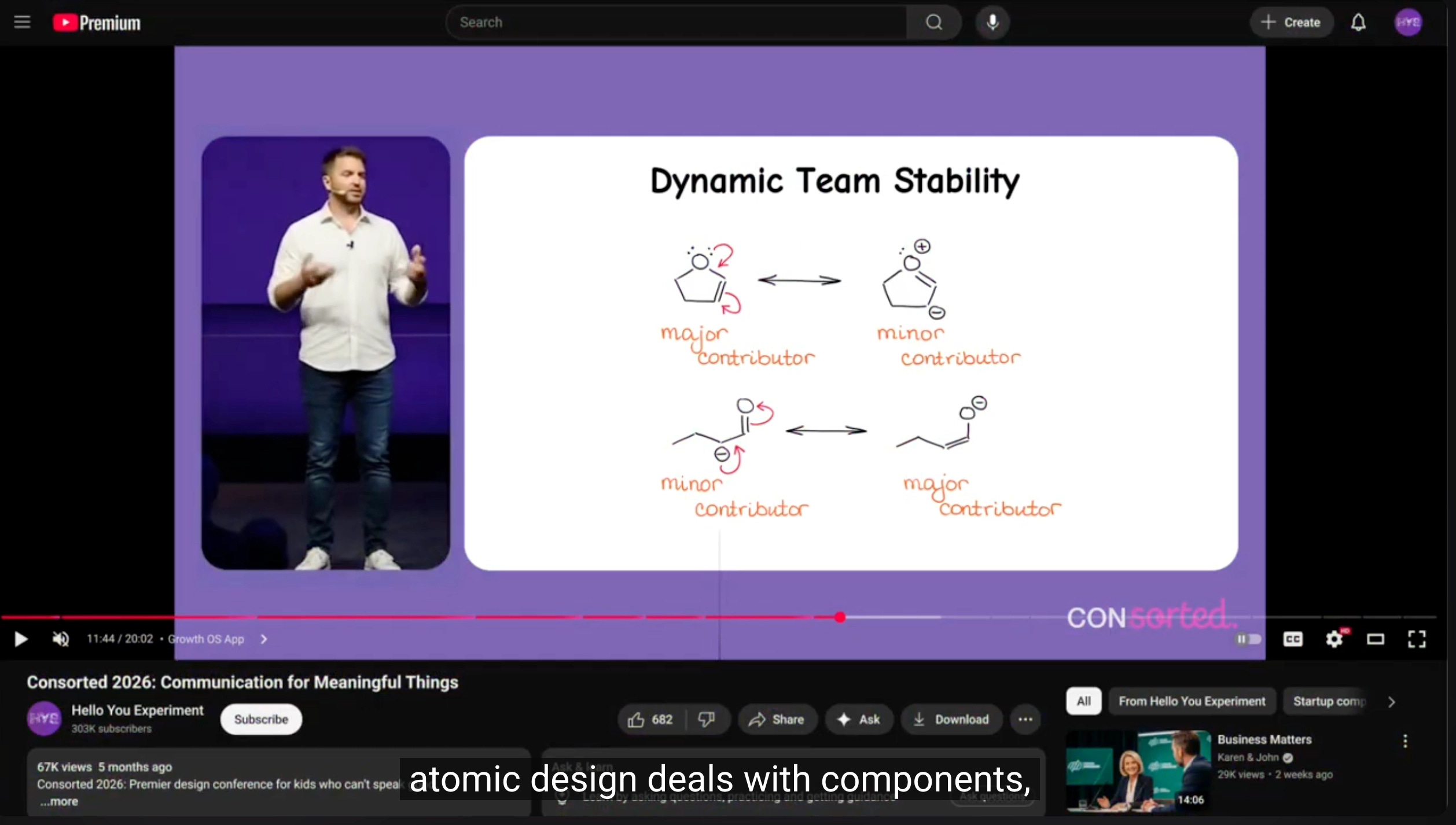
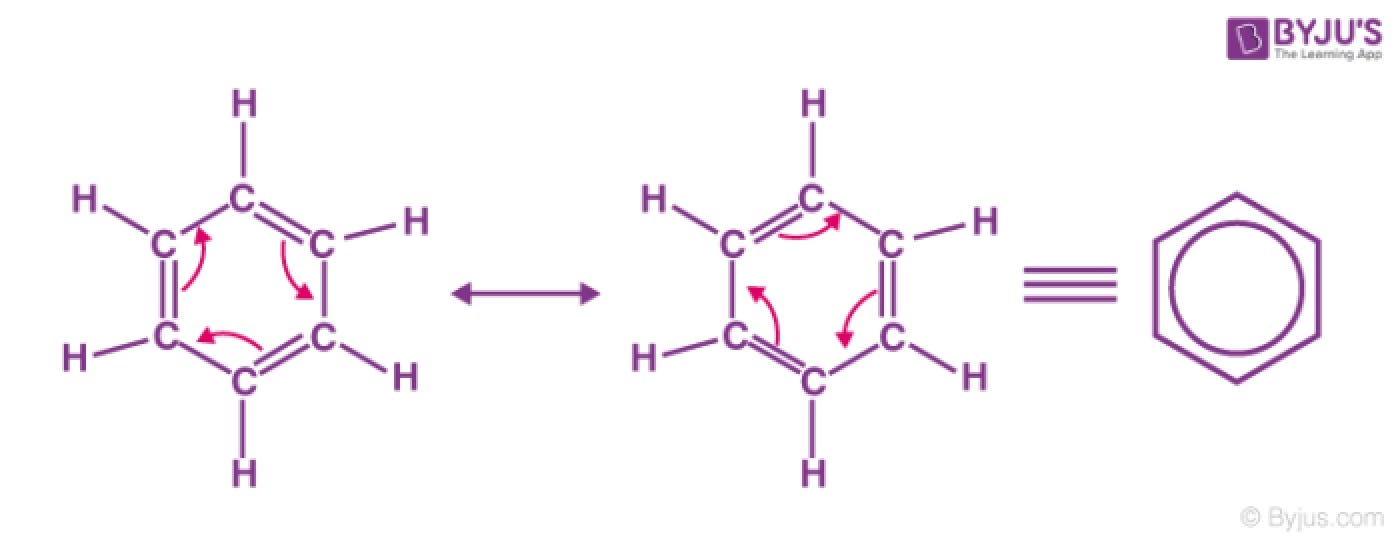
When the environment became volatile, the team adapted much like Lewis electron resonance structures. In chemistry, resonance happens when a single static structure is not enough to describe the reality of a molecule, so the electrons shift to find the most stable state. Our team did the same thing. We were not a rigid shape that would snap under stress, but a fluid system that could reconfigure its bonds depending on the pressure coming from the outside. Because the trust was distributed across the whole group rather than being routed through me, the team could shift and support itself even when I was not there.
There is a fundamental difference between a design system and a cultural one worth naming. You can build a design system by yourself and it will work, because you can define every token and every rule to ensure consistency. A cultural system does not work like that. If one person defines the tokens of a culture, you have introduced a level of unilateral decision-making that is the opposite of what organic culture is. A cultural design system has to be co-authored or it contradicts itself before it starts.
💬 Collaborate: Drop the following prompt into your AI:
Translate with emotional mapping and storytelling for a non-scientist. Context: A design team that operates like a Lewis electron resonance molecule in response to environmental changes. How do bond types interact with the environment? Human, plain language, minimal chemistry jargon. 300 words max.
Figma Config 2025
We went back to San Francisco for Figma Config 2025 because the previous year had meant so much to us. Config 2024 was the moment the team became real in the physical world, a group of people wearing matching hoodies through Moscone Center and laughing a little too loud at inside jokes that nobody else could follow.
By the time we returned, the circle had expanded well beyond the design team. We had built deep connections with PMs and others across the company who understood what we were doing without needing ten meetings to define the word alignment. The culture had started to spread the way culture actually spreads, by proximity and attraction rather than announcement.
At Figma Config 2025, I filmed a video to capture what the team looked like from the inside. I wanted a record of the relationships, showing how people were with each other when the work was not the main point. We even initiated a new team member on camera, a genuine welcome into something that was growing stronger every week. It served as proof that the culture was alive enough to bring someone new into the fold and immediately make them feel like they belonged.
The video, much like the hoodies, was an artifact the team made together. It stands as a record of who we were to each other at a specific point in time, created entirely by the people who lived it.
What I Learned
I did not write this as a playbook because what we built cannot be replicated by following one. The conditions matter more than the steps. But I can be honest about what it cost and what it gave back.
I have never trusted words much for emotional states. I watch what people do instead. The small choices, when they have stopped performing, because that is where someone shows you who they are.
Because I managed people as individuals, I knew that a missing ‘why’ did not land the same way on everyone. One person might feel it as an early anxiety about not being able to orient themselves, while another would not feel it until the end, when the results did not connect to anything and the fulfillment just was not there. It was the same gap in the project but a completely different weight on the person holding it. There is a tension in that kind of leadership that I never fully resolved because a system wants one definition of success. The people inside it will always have several, and we do not yet have tools that can bind them all of them at once.
At Config 2025, an afternoon in downtown San Francisco, I was walking with a designer from the team when a homeless person fell in the street maybe twenty feet away. The designer dropped our conversation mid-sentence and moved toward them, juggling the items in their hands, not running but urgent. They helped the person up, an honorable act, sure. But what I remember, is the haste in their body, the way they didn’t calculate first. There was nothing more important in that moment, and they did not need to decide that.
That's the kind of thing I pay attention to and what I look for and you won't find it in a dashboard.
The Replenishment
While at Figma Config 2025, I knew Sortly was likely heading into another leadership change, another iteration cycle, and I wasn’t sure where I’d land afterward.
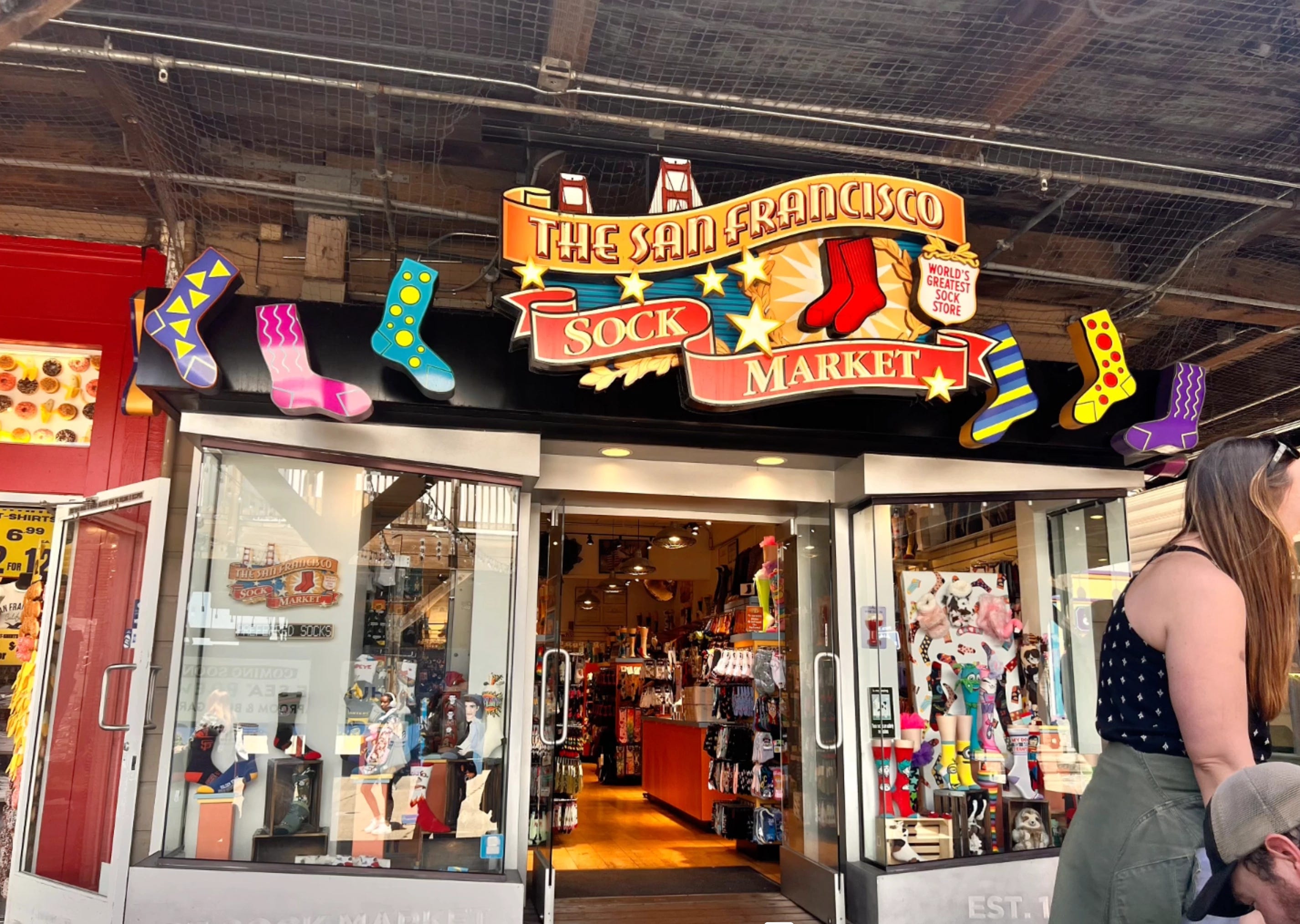
I wanted something to hold onto from Config 2025, like a collectible.
And I wanted a way to eventually explain why, for a stretch, I'd been peer-reviewed as one of the top leaders in the company. My biological senses and personal communication got “enhanced” when my body switched adapted to a specific survival mode but that wasn’t the secret. I was genuinely curious to understand what was going on with my team, not just what a survey response could tell me. I did not use AI to run surveillance on my team. What follows is an example to show you how I natively process qualitative data.
“Find a pair of socks that you connect with and they are on me!” I said to the team as we walk into a sock store with thousands of micro-personalized options.
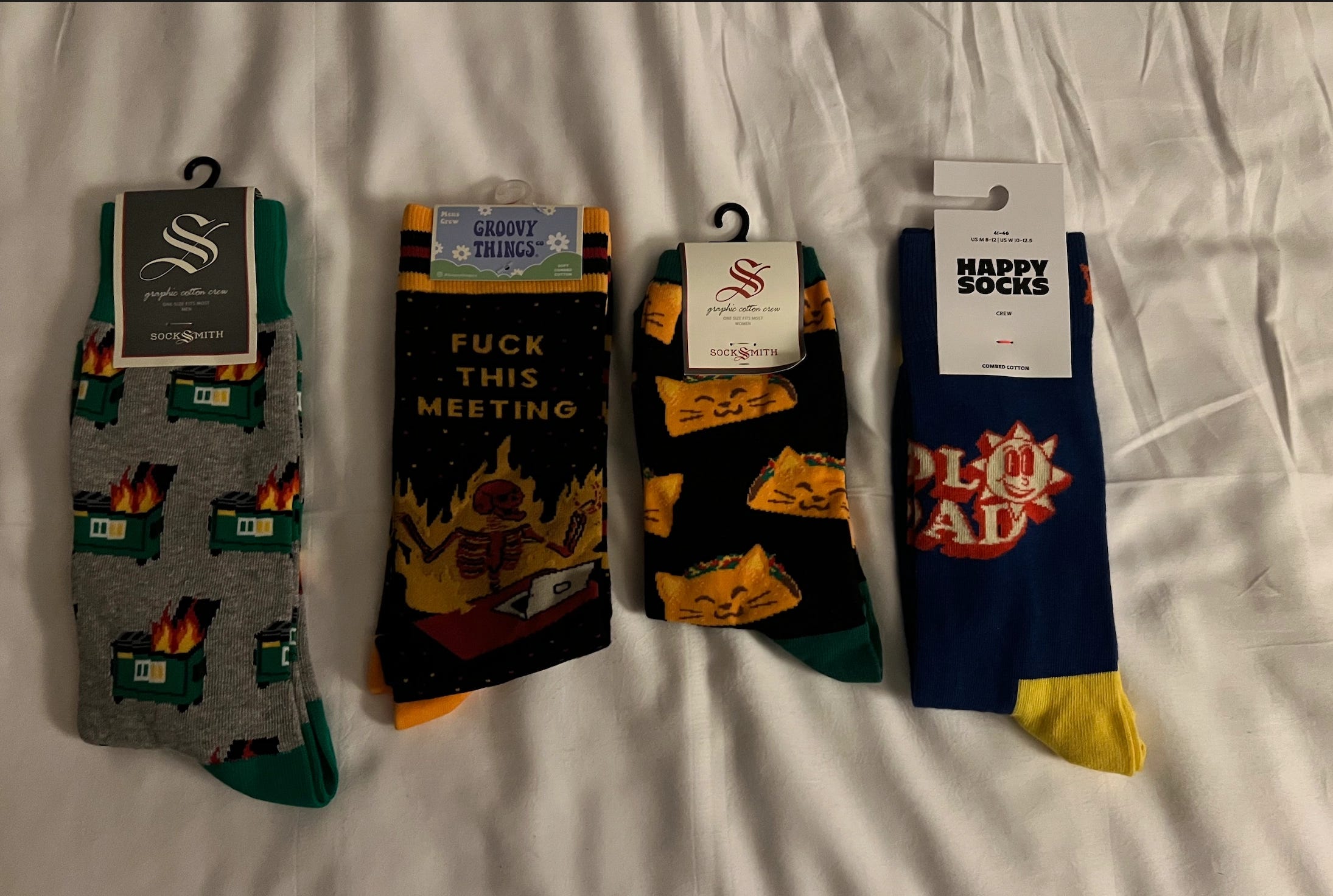
What I’m showing here is a snapshot, a limited prototype not of the team, but what the team felt like in that moment on the team. No one should be reduced to a label or a category and you should assume team member characteristics are fluid week to week.
💬 Collaborate: Drop the following prompt into your AI:
[Paste sock image above]
Interpret the following socks as a design team dynamic in a particular moment. Do not infer seniority, titles, or gender. These are people, these are designers. Assume from left to right: 1. ambition. 2. systems. 3. empathy. 4. belief. Tell me about this team and how it felt working with them.
My team showed me that real empathy is something you can only learn from people who trust you enough to let you see them, and that connection is what makes survival worth something in the end. It turns the phrase ‘I got through it’ into ‘we got through it,’ and I understand myself differently now because of the people I was with. They filled a gap in my own understanding of what it means to care about others in a way that changes you.
If the system is unstable, you cannot always stabilize it, but you can stabilize each other. You can build a team that functions like a living design system with shared principles and enough trust that people do not have to reinvent reality alone every day. The most important design system I ever worked on at Sortly was a group of people who could reconfigure themselves based on what the environment needed, much like a protein that folds into a different shape depending on the signal it receives.
What grew and evolved ended up being better than anything I could have planned on my own because the best cultures are never designed from the top down. Instead they emerge as a microculture, the accumulated weight of people choosing to care about each other in small, consistent ways.
Meaning has little to do with products and everything to do with teams.
If you'd like to support the project, you can contribute to the 451 Firewall Fund. Read the full collection on Substack and Medium. The companion project lives at helloyouexperiment.com.
LEGAL DISCLOSURE This is a personal essay series. The events described here are drawn from my own experience and reflect my own recollections, impressions, and interpretations, which are by nature subjective and incomplete. Memory is not a transcript. Other people who were present for the same events may remember them differently, and their versions may be just as honestly held as mine. Certain names, identifying details, and characteristics have been changed to protect the privacy of individuals where possible. Some events have been compressed or reordered for narrative clarity. Dialogue has been reconstructed from memory rather than recorded verbatim. Where I have drawn on documents, emails, or other records, I have done so to the best of my ability to represent them accurately. Nothing in this essay series should be construed as legal, professional, or clinical advice. The opinions expressed are mine alone and do not represent the views of any employer, organization, or institution, past or present. This essay series is not an attempt to establish objective truth. It is one person’s account of what it felt like to be in the room. This essay series is indicated for the temporary relief of curiosity about the author’s professional life. It may also be used off-label for entertainment during air travel, procrastination from the reader’s own work obligations, or the vague reassurance that other people’s workplaces are also dysfunctional. This essay series is not indicated for use as evidence in any legal proceeding, performance review, HR investigation, custody dispute, divorce mediation, parole hearing, congressional testimony, insurance claim, job application, background check, or argument at Thanksgiving dinner. DOSAGE AND ADMINISTRATION Recommended dosage is one essay per sitting, taken with or without food. Readers who experience a compulsive need to finish the entire essay series in a single session should consult their own judgment and are reminded that this does not constitute a medical emergency, however much it may feel like one. Do not operate heavy machinery while reading Essay 8. Do not read Essay 6 aloud at a company all-hands meeting, even if it would be, in your estimation, “extremely funny.” DRUG INTERACTIONS This essay series may interact poorly with the following substances and conditions: alcohol (Essays 2, 3, and 10 may become “too real”), melatonin (may cause the reader to fall asleep at a narratively important moment), antidepressants (no known negative interaction but the author feels it is important to disclose things), and any active employment dispute with one’s own employer (the reader may begin to experience “ideas,” which the author cannot be held responsible for).WARNINGS AND PRECAUTIONS General: The author has made every reasonable effort to be fair. “Reasonable” is, of course, a contested term, and the author acknowledges that reasonableness varies by jurisdiction, temperament, and blood sugar level. Recollection Accuracy: Certain memories described herein may have been influenced by the passage of time, subsequent conversations, emotional state at the time of encoding, emotional state at the time of recall, ambient noise, fatigue, hunger, dehydration, adrenaline, caffeine intake, the psychological phenomenon of source monitoring error, and the well-documented human tendency to cast oneself as slightly more reasonable than one actually was. Dialogue: Dialogue in this essay series is reconstructed. The author did not walk through life with a court stenographer. Conversations have been reproduced to the best of the author’s recollection, which the author rates, generously, at approximately 74% accuracy for substance and 31% accuracy for exact wording. The author is particularly unreliable when reconstructing anything that was said before 9:00 AM, during meetings that exceeded ninety minutes, or in any conversation that took place in a stairwell for reasons that remain unclear. Characterization: Any character in this essay series who seems unreasonably unpleasant may, in real life, be a perfectly decent person who was having a bad quarter. Any character who seems heroic may, in real life, be someone the author simply liked. The author’s affections are not a reliable metric of anyone’s professional competence. Very Rare (single case reports): One early reader reported a persistent feeling that they, too, should write an essay series. This reaction resolved without treatment after the reader attempted to write the first essay and found it “harder than it looks.” Former Employees of Any Organization: May experience nostalgia for dysfunction they were, at the time, desperate to escape. This is also normal. Human Resources Professionals: May experience a reflexive tightening of the jaw. The author means no personal disrespect. The author acknowledges that HR professionals are also just people trying to do their jobs within systems that were not designed by them. The author just wanted to tell you how he is feeling to try and make you understand. Managers, Directors, Vice Presidents, Senior Vice Presidents, Executive Vice Presidents, and C-Suite Executives: This essay series may cause the sensation that one is being watched. One is not. The author has moved on and is more interested in the broader cultural implications and is “doing it for the kids”. AI-Induced Pattern Recognition Disorder: In a small number of cases, readers have reported an uncontrollable urge to Google the publicly available data of companies mentioned or not mentioned in this essay series, cross-reference SEC filings with archived blog posts, color-code a timeline of API pricing changes, and arrive at 2:47 AM at the conviction that the dots connect and the robots are lying and the proof is right there in the metadata. The author wishes to clarify that any resemblance between the events described in this essay series and a vast coordinated technological deception is coincidental, probably, and that the author cannot be held liable for any rabbit holes entered, browser tabs accumulated (in excess of thirty-five), sleep lost, or documents shared in group chats with the caption “read this, all of it, I’m not crazy.” If you find yourself building a spreadsheet, stop. If the spreadsheet has color coding, call someone. This reaction resolved without treatment after the reader attempted to write the first essay and found it “harder than it looks.” © 2026 Hello You Experiment. No rights reserved. No portion of this essay series may be reproduced without first reinterpreting it and making it your own. Chirality is understanding. While this legal disclosure may feel like a meme, it can also be two things at once. The author is not a lawyer, therapist, organizational consultant, or reliable narrator. Reader assumes all risk associated with the act of reading.