
Chapter 8.1: Inverse Perception Design, The Method
How to design communication that survives the system and rewrites the record after you leave.

By Ryan Stephen, former Director of Design at Sortly, Inc. Background in evolutionary biology, chemistry, and product design. These essays use one company as a specimen to examine what happens when organizations lose the ability to hear the people inside them, how AI is about to make it worse, and why designers might be the only ones left to ask why.
How to Design Communication That Survives Without You
For Context
The other essays in this series diagnose a company culture and then zooms out to show that my experience was not unique. This article is about what I did once I understood the environment was a closed-loop.
I need to be careful because this method sounds like three different things depending on who is reading. It could be a revenge plot, a whistleblower strategy, or a design methodology. I am writing about the third, but it would be dishonest to pretend the other two are not somehow interlaced somehow. Anyone who has navigated an organization that lost it’s ability to hear it’s own people would say the same. Oh, there’s one more thing.
At 42, my neurodivergence transitioned from a hidden trait to a necessary survival mechanism, catalyzed by the environment at Sortly.
I say that because survival mode amplifies native cognitive processing. My brain processes spatial information bidirectionally, where left-to-right isn't hardwired as the only valid direction. Additionally, I’m ambidextrous but the world is optimized for right-handed people the same way it is optimized for specific thinking patterns.
When I don’t want my eyes interfering with my thinking, I write cursive backwards. The thoughts flow forward and get documented, but the words are unreadable to me in real time, which means the thinking stays uncontaminated by what I’ve already written. I previously thought of it as a way to override ADHD and unlock creativity. I didn't realize it at the time, but this bidirectional thinking was the the critical blueprint I needed to build a communication system that reads one way in the present, and an entirely different way in the future.
The Funnel
I studied psychology before I studied design or science, which is how I came across Edward Bernays indirectly and earlier than most people in my field. In high school I wrote an essay examining how the Nazis had adapted Bernays’ work to build their model of mass persuasion, and I argued that the same mechanics could be inverted for constructive ends. It did not go over well. In college I was selected to represent my university for the Rhodes Scholarship, and the prompt asked something like how science could change the world. I wrote about communication instead, about the fact that scientists could not speak to ordinary people and that discoveries were dying inside the language of the community that made them. I did not get the scholarship. But the question never changed for me. How do you take the machinery that manufactures belief and point it toward understanding.
Most people in marketing have never heard of Bernays, which is strange because he invented modern public relations. He was Sigmund Freud’s nephew and he took his uncle’s theories about the unconscious mind and turned them into campaigns that reshaped American culture at scale. He reframed cigarettes as feminist liberation, turned bacon and eggs into a national ritual, and helped overthrow a government to protect a fruit company’s supply chain. What interests me is not the campaigns but the principle underneath them. Belief is not reached through reason. It is manufactured by controlling context and timing long before facts arrive. His book Crystallizing Public Opinion remains one of the most influential and least read texts in the history of corporate and political communication. Bernays understood that reality is malleable if you control the context, and modern organizations eventually applied this exact principle to their own employees.
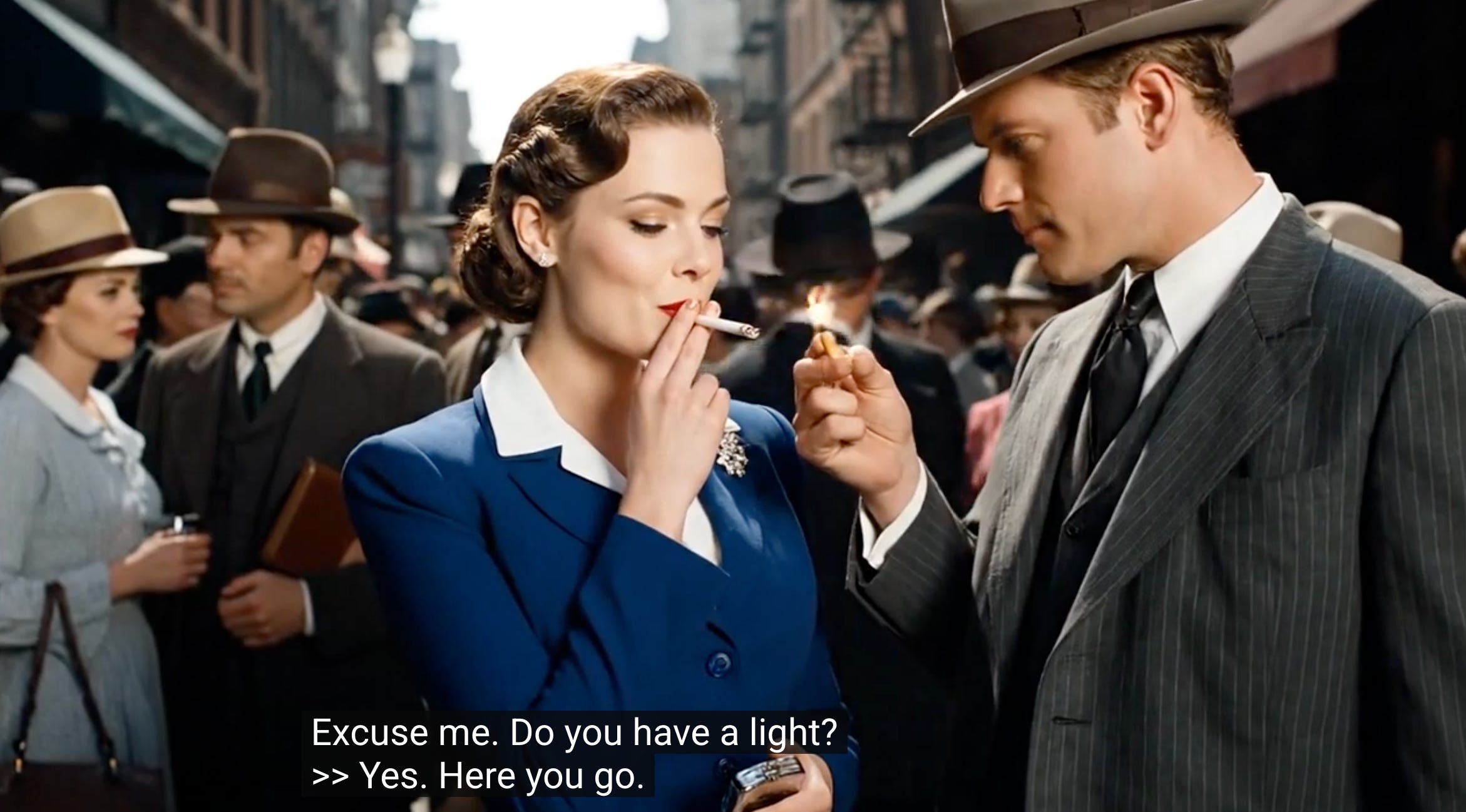
Every marketer alive is practicing some version of what Bernays formalized whether they know his name or not. The shape is always the same. You start broad, filter out inconvenient signals, and arrive at a version of reality that serves whoever built the path. This is standard practice in corporate communications, political messaging, and product marketing.
It is also what was happening inside Sortly without anyone having designed it deliberately. The branding softened the language of its own industry and the blog promised capabilities the product could not deliver. Internal communication went through a similar process, stripped down until it was safe enough for a meeting but too empty to act on.
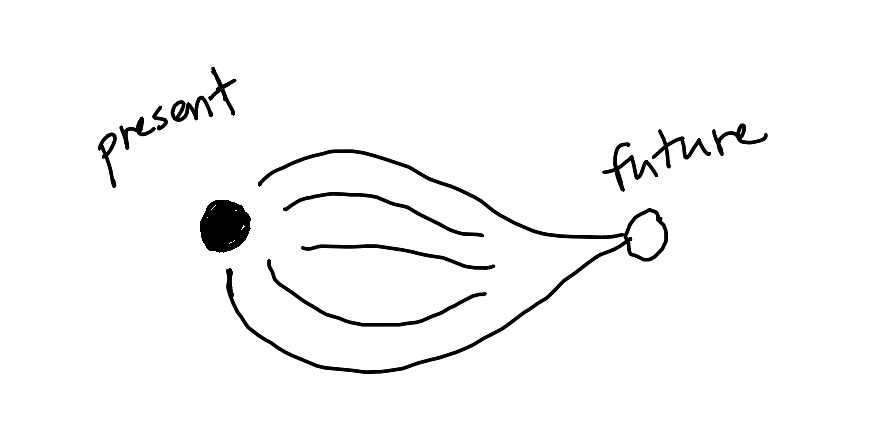
Nobody sat in a room and said let us build a perception management system and nobody had to. The environment narrowed reality toward conclusions that protected the system regardless of what people inside it were actually experiencing. That is what business experts do.
I think of this as the funnel version of perception design. Attention enters wide and exits through a controlled opening. The person at the narrow end believes they arrived at a conclusion when in fact the conclusion was waiting for them before they started walking. Most people call it marketing, but I don’t. There’s a reason I got out of marketing.
Why I Needed a Different Method
Every standard mechanism for honest signal to travel upward was technically in place, but there was no path for that signal to produce change. A designer’s job starts with interpreting and implementing a vision. The issues I raised were not superficial, they were derivatives of the disconnects I outlined in The Semiotics of Sortly, The Facade, and The Knockout Organism.
As a designer, I didn’t just use words. Guides, templates, AI chatbots that could shape scattered notes into structured documents, kickoff checklists that forced the hard questions to the front of a conversation instead of the back. But you cannot template your way into shared understanding or shared alignment. If a problem is not shared it is not a problem, it’s a cost the system distributes into places where nobody is required to look.

Then we watched a colleague go under.
They were one of the most dedicated people on the team, the kind of person who stayed late not because someone asked but because they believed in what they were building. The task they were given was ambiguous and they were trying to make sense of something nobody had defined before handing it over. By the time they pulled me aside at the annual company event their face was doing that thing faces do when someone is holding themselves together on purpose.
If a problem is not shared it is not a problem, it’s a cost the system distributes into places where nobody is required to look.
They told me they were hitting a wall, failing by some measure no one had defined. Their plan was a Slack message, public but careful, describing where they were stuck, what they thought they needed, and what it felt like in their body when the target kept moving. The hope was that one person going first, without blame, might give others permission to be honest too. They were using the inverse of empathy, vulnerability, to design an outcome in an environment that, intentionally or not, selected against it.
Two weeks later their Slack profile picture went gray, deactivated. The message they had been composing, never reached anyone.
My phone buzzed shortly after with a company-wide message about referral bonuses, a finder’s fee for solving a problem the system created, which was almost elegant.
“I am struggling, this is where I think I’m failing, and this is what I think I need to succeed.”
Talent and dedication mean something different in a system where revenue is celebrated and criticism is managed.
The conversation I needed to have felt unsurvivable. I still wanted to be there.
The Inverse
Fadi Chehimi wrote a strong framework for perception design in immersive experiences, designing environments where the mind accepts the artificial as real. What I am describing inverts that direction. Instead of narrowing, I was trying to build communication that widens over time.
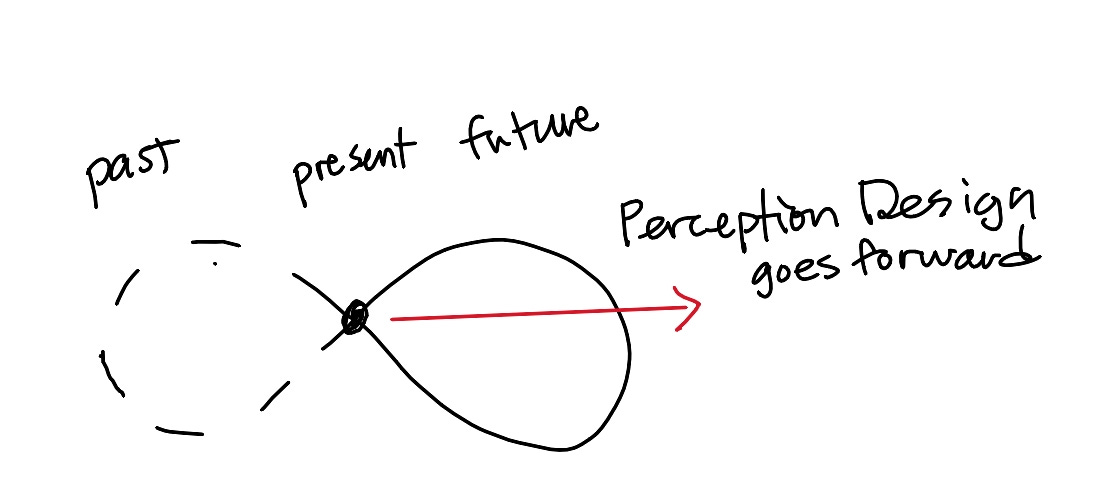
The artifacts I created were meant to start as one thing and become something larger as context accumulated around them. A performance review serves one purpose inside the corporate record. It carries a different weight once the person who wrote it is gone and the pattern they described has continued without them.
Whatever I put into the record had to survive without me so every entry had to remain true on its surface, whether it was a farewell or a self-assessment or a team message. The communication satisfied the company’s requirements because it was honest on its own terms. But I wrote with awareness that the reader would change even if the words did not.
In the environment I was working inside, time worked like leverage. Meaning shifted depending on when you asked and who was in the room. Nothing stayed pinned long enough to hold a conversation accountable. I used that same instability, except I made the artifacts stable and let time do the reinterpretation. Time was a design constraint and it is not lost on me how sci-fi that sounds.

At this point my design and science background were fusing together to solve an unsolvable problem so I think of the artifacts as palindromic. In molecular biology, a palindromic DNA sequence reads the same in both directions along the strand, and that structural symmetry is what allows the sequence to perform critical functions like gene regulation and immune defense. The artifacts work on a similar principle.
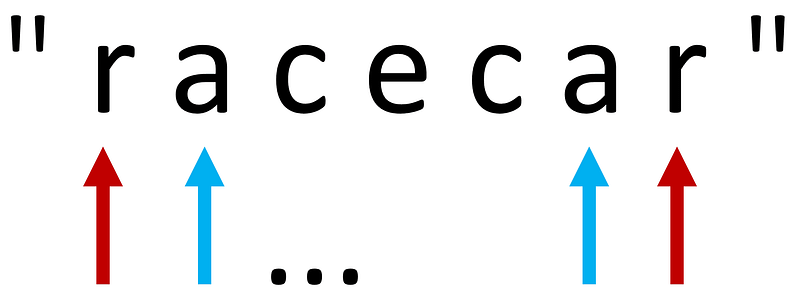
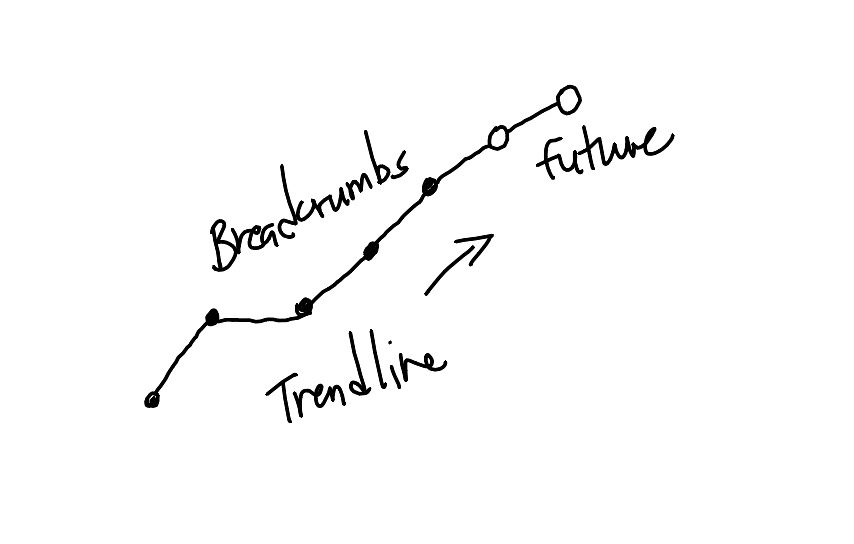
Read forward in real time they are sincere and complete. Read backward after a triggering event, the same words carry the accumulated weight of everything that happened between then and now. The reader arrives with new information and the artifact that seemed like furniture reveals itself as load-bearing. And when several of these artifacts are placed next to each other, the individual moments link into a narrative that was never written in one place but was always telling the same story.
The closest experience most people have to this mechanism is a well-constructed film. A screenwriter plants something in the first act. A line of dialogue, a background detail, an object on a table. In the moment it belongs to the scene and does its work without drawing attention. Then the third act arrives and the context shifts. That first-act detail was structural the whole time. The audience rewinds mentally and processes the same information through a different frame and the gap between what they thought they were watching and what was actually being built is where the emotional weight lives.
The difference between a film and what I practiced is that a screenwriter knows the ending. I did not. I watched a pattern confirm itself month after month while hoping it would break. I documented what I observed in formats that would remain legible regardless of which future arrived, writing forward into uncertainty and letting time decide which reading was meaningful.
None of this was planned as a sequence. I wrote from the heart, from what I believed in the moment, and once an artifact carried a timestamp it was fixed. I could not reshape it later to mean something more pointed than what I actually felt when I wrote it. But they share a vocabulary and a message because they came from the same person inside a closed-loop environment for more than a year.
The whole time I was advocating for change in the present, I was also building something that could outlast the present failing. Everything the company communicated could be reframed later because nothing was ever pinned down with enough specificity to hold. I wanted the opposite, artifacts specific enough and honest enough that reframing them would require ignoring what they actually said.
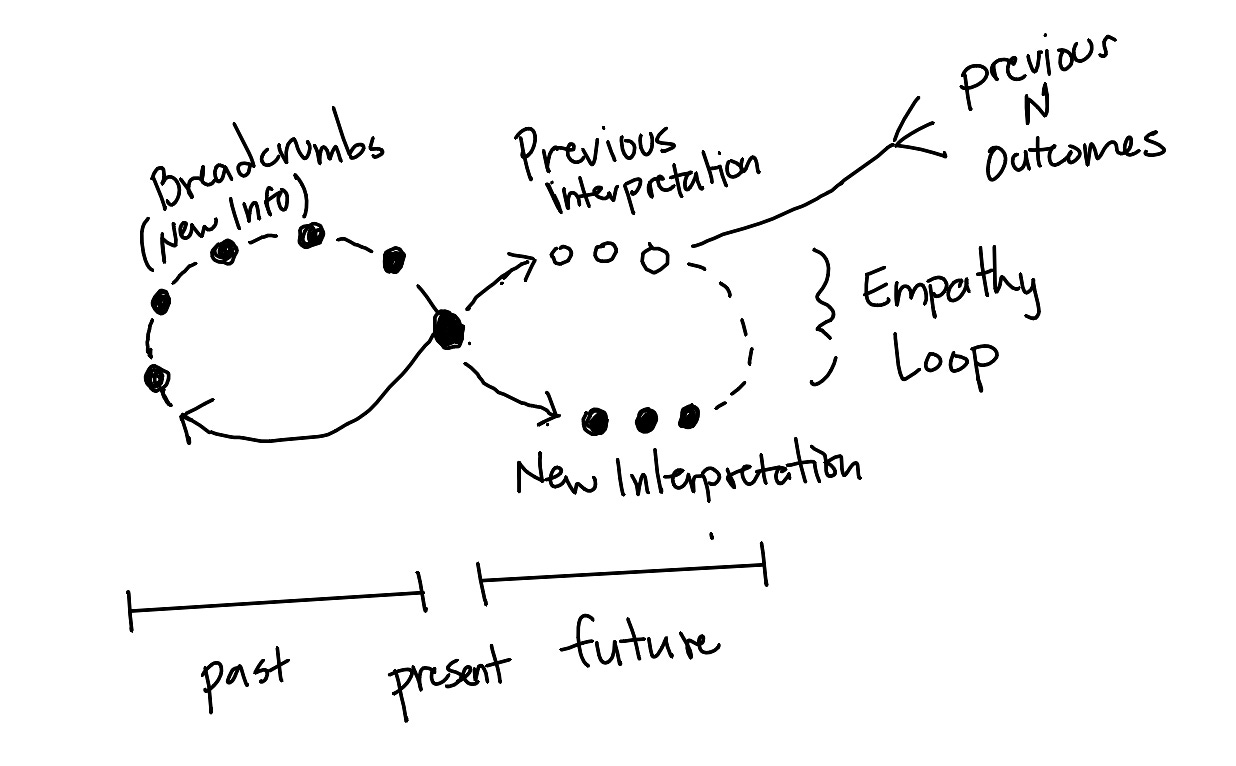
Every form of communication I studied, marketing, PR, corporate messaging, works by shaping the present to control what comes next. What I built lives in the past. It depends on reinterpretation, on someone looking back and seeing something they missed, and that changed relationship with the past is what reshapes the present and opens different futures.
Whether any of this is meaningful depends on who reads it and when. I don’t have control over the narrative, I already wrote my story. The uncertainty isn’t a flaw in the method, in a closed system, it’s literally the method.
In Part 2 I will show you what I left behind but the interpretations, my professional reputation, and the future belong to you. For me it’s pixel-lated.
This essay is part of a series on design, communication, and the future of work. Writing plainly about how organizations actually work invites attention. If you'd like to support the project, you can contribute to the 451 Firewall Fund. Read the full collection on Substack and Medium. The companion project lives at helloyouexperiment.com.