

Chapter 5: The Specimen
Why Millennials and Gen Z are trading performative alignment for physical safety.

By Ryan Stephen, former Director of Design at Sortly, Inc. Background in evolutionary biology, chemistry, and product design. Exploring what happens when organizations lose the ability to hear the people inside them and why designers might be the only ones left to ask why.
Propagation Summary: The piece argues that what looked like one company’s dysfunction was really the broader economy in miniature: culture dissonance, signal failure, decision paralysis, and a workforce politely cracking behind their Slack avatars.
One Organization Under the Lens of 2026’s Workplace Research
It is much easier to keep research at a distance when it remains abstract. You can read a report about something like “culture dissonance” and nod along without actually feeling anything. The statistics arrive pre-digested and safe. You see that fifty-four percent of employees are experiencing quiet cracking, or that only six percent believe their feedback matters, or that disengagement costs the global economy hundreds of billions of dollars. These numbers are large enough to be impressive but distant enough to feel like someone else’s problem. They describe a condition without ever requiring you to inhabit it.
I inhabited it.
For two years, I was the Director of Design at Sortly, a profitable SaaS company with a remote workforce and thousands of happy customers. By every conventional metric, the company was succeeding. Revenue was up and the five-star reviews kept coming. Yet the internal reality of that success felt exactly like the trends surfacing in 2026 workplace research. Whether it was Gallup’s benchmarks on engagement, or Deloitte’s work on organizational agility, everything in those reports rhymed with what I saw from the inside.
All of it rhymed with what I saw from the inside.
This isn’t meant to be a critique of a single company. I have already written those essays, and most of us already know what is happening in the modern workplace. My goal here is to hold up one specific organizational specimen against the light of current research. I want to see, with as much objectivity as possible, exactly where the contours match.
A specimen doesn’t need to be broken to be useful. It just needs to be legible. Sortly was small enough to see clearly and stable enough to study over a long period. For me, it served as a remarkably clean instance of the same dynamics that macro research describes in aggregate.
Culture Dissonance as a Steady State
Gartner’s 2026 analysis introduces the concept of “culture dissonance, which they call “a systemic institutionalization of misalignment.” Their report identifies a widening gap in confidence between executive perception and the actual employee experience. While 42% of global executives believe employee satisfaction is rising, only 27% of workers share that sentiment. Even more concerning is that only about a third of employees feel any strong connection to their organization’s mission or purpose.
At Sortly, this gap lived in the distance between what I came to think of as the dashboard layer and the work layer. Senior leadership understood the company primarily through revenue metrics, growth charts, and quarterly narratives. These instruments were not dishonest because they measured exactly what they were designed to measure, but they became the primary lens through which the organization understood itself. The individual contributors lived in a different version of the company entirely. They dealt with constant rework, shifting constraints, and decisions made in rooms they never entered. It created a specific kind of fatigue from trying to determine which version of reality would actually persist past the next meeting.
Gartner’s research highlights the high cost of performative alignment, which happens when an organization projects a facade of cohesion that contradicts its daily reality. Culture Partners’ Stanford-backed research found that adaptive alignment leads to 192% greater revenue growth by genuinely integrating culture and strategy. The alternative is a phenomenon they call the Action Trap, where leadership focuses on strategy while completely ignoring the culture required to sustain it.
At Sortly, the internal vision sounded like a direction until you actually tried to follow it. This vision never appeared on the public website, and nobody inside the company could explain what it meant in a way that translated into actual requirements. From a distance, this kind of ambiguity was functional because a vision that never commits to anything can never technically be wrong. But from the ground level, where designers and engineers have to turn vague words into software decisions, it felt like moving through organizational quicksand.
The 2026 research attaches a specific number to this experience. Only 47% of employees strongly agree that they know what is expected of them, and fewer than half understand which behaviors actually align with their company culture. My time at Sortly showed me exactly how those statistics feel when you are living inside them. It isn’t a feeling of total confusion. It is more like a persistent, low-grade uncertainty about whether the ground beneath your work is actually stable. If you recognize that feeling while reading this, you should know that the research places you in the majority by a very wide margin.
SaaS Sprawl and the Fragmentation of Signal
The macro research on SaaS sprawl describes a condition where the average organization manages 305 separate applications, 38% of which go entirely unmanaged by centralized IT, resulting in siloed data, duplicated effort, and what IBM describes as “mental switching costs” as employees navigate disconnected platforms.
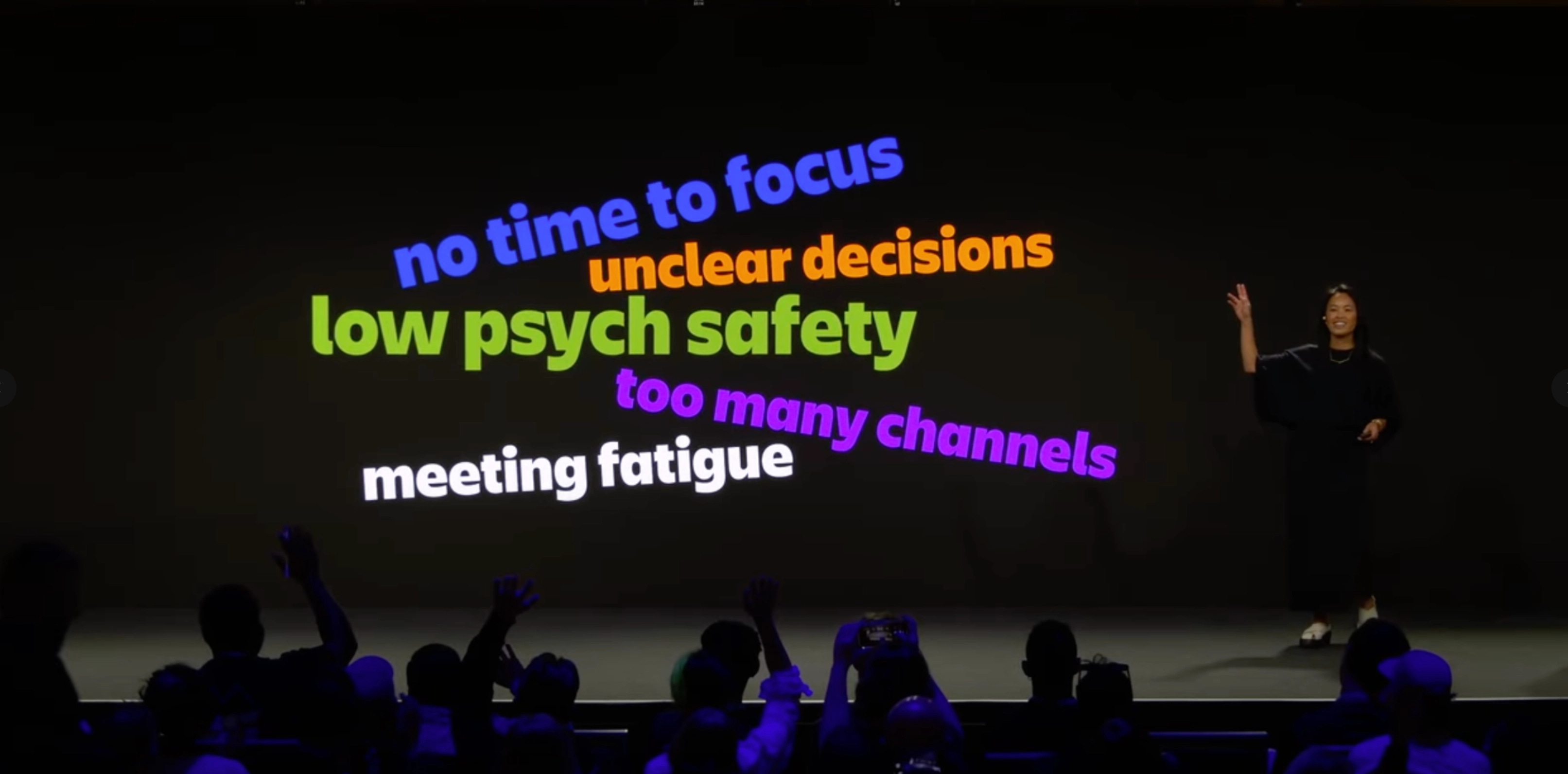
Macro research on SaaS sprawl reveals that the average organization now manages over 300 separate applications. Nearly 40% of these tools go entirely unmanaged by IT, which leads to siloed data and what IBM calls “mental switching costs” as employees constantly jump between disconnected platforms.
Sortly was a small company rather than a massive enterprise, yet this same dynamic was present at a human scale. I watched support tickets surface patterns that never reached the product team and saw design insights land in channels that the people who needed them most had muted months prior. While my previous essay on Sortly a knockout organism describe these signaling failures in detail, the macro research provides the sense of scale. When Gartner reports that only 13% of employees give their company top marks for internal communication, they are describing the weather rather than a specific dysfunction. The tools themselves are just a symptom. The real condition is a system where signals are generated but never actually move through the organization, and what I witnessed at one company is apparently happening nearly everywhere.
The Mechanics of Indecision
Research from 2026 points to a rising trend of executive decision paralysis. This stagnation is often driven by a combination of burnout, fear of failure, and over-analysis. Specifically, dimensions of burnout like cynicism and exhaustion have been identified as clear predictors for behaviors like procrastination, buck-passing, and hypervigilant decision-making. The cost of this indecision is significant. While 85% of executives acknowledge that they need more agile work models, only 39% have actually taken meaningful action to implement them.
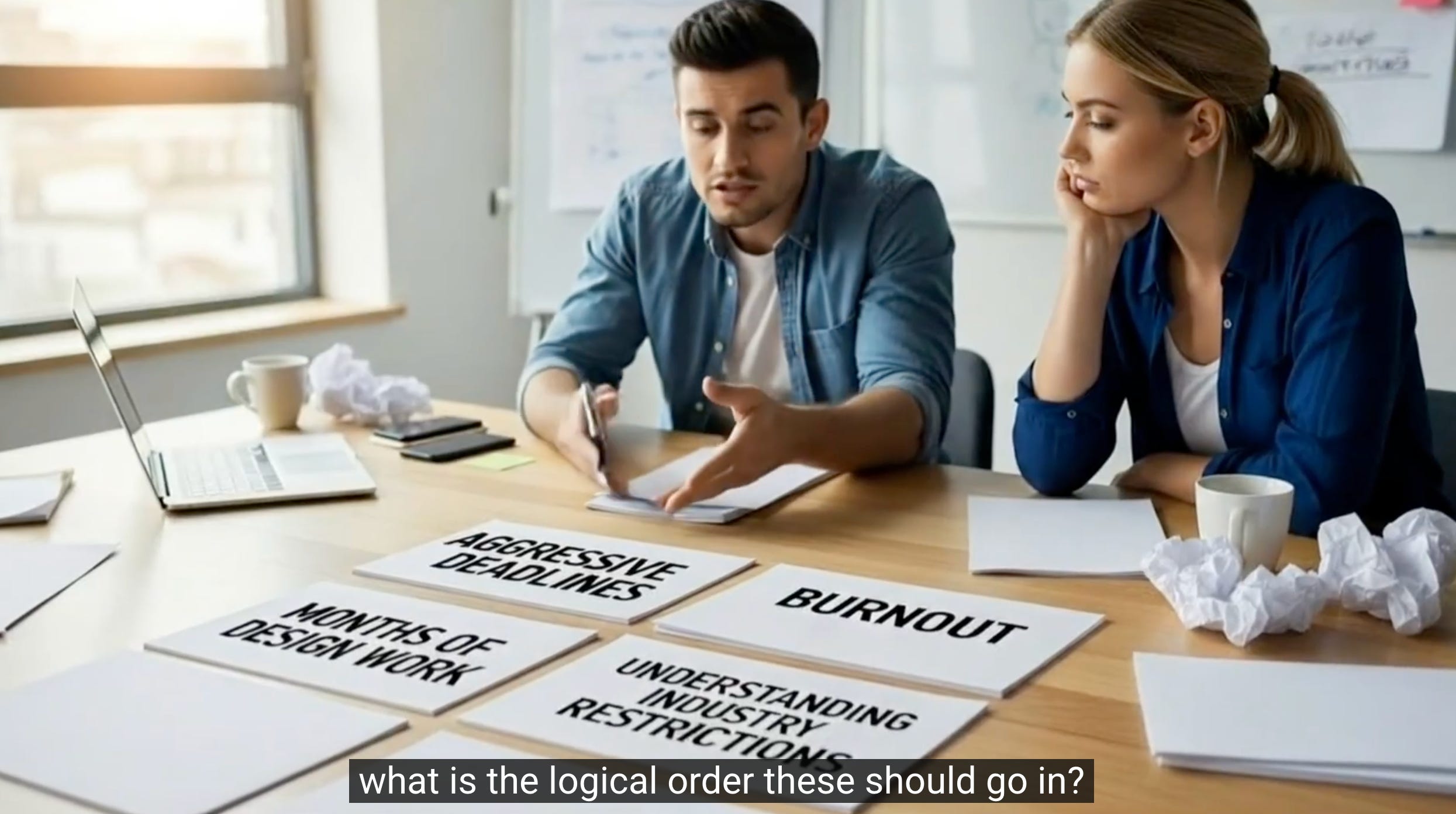
At Sortly, this looked less like clinical paralysis and more like a specific loop of ambiguity and deferral. In the Knockout Organism , I described how ideas were suffocated by process rather than being killed by a clear decision. The new research provides the underlying cognitive reason for why that happens.
Gartner’s research describes a culture of hypervigilance where the fear of making a mistake leads to excessive data gathering. I watched a variant of this where the data gathering actually became the work. The organization could always justify one more round of research or another exploration phase because those requests were structurally indistinguishable from due diligence. You could spend weeks preparing for a decision that never arrived. Eventually, the pattern became legible as a system of deferral that used research as a shield against the risk of being wrong.
The research on time blindness as a symptom of executive function crisis also felt familiar. When cognitive load exceeds leadership bandwidth, they often underestimate task duration or lose track of time entirely. While leaders might see this as deep work, employees often perceive it as a lack of direction. In a remote-first company, this manifests through the digital avatar. When a Slack message goes unanswered for three days, people don’t necessarily assume you are overloaded. They read the silence as a signal. In an environment where psychological safety is uneven, people will almost always settle on the most anxious interpretation of that silence. Designers at Slack use a dim gray to show deactivated accounts because it is easy to see at a glance.
Quiet Cracking and the Cost of Silence
The 2026 research has introduced a new term to describe what follows quiet quitting. They call it quiet cracking, which is an internal erosion of workplace satisfaction. This state is defined by persistent unhappiness and emotional detachment even when an employee appears functional to those around them. The data shows that this affects 54% of the workforce, with one in five people describing the feeling as constant. The causes are the same ones that show up in every anonymous survey and exit interview. People are dealing with role creep disguised as growth opportunities and career paths that stall for no clear reason. The result is a profound sense of being unheard, as only 28% of employees strongly agree that their opinions actually count at work.
I did not observe quiet cracking as a dispassionate researcher. I observed it as someone who experienced it, who watched colleagues experience it, who noticed when their Slack avatars went gray. In a fully remote company, the avatar is the person. No empty desk, no coat missing from a chair, just presence indicators that change state without announcement. Leadership changes didn’t always arrive through formal transitions. Sometimes they arrived as absence. A meeting with fewer names. A channel that goes quiet. A person-shaped gap where institutional knowledge used to be.
The research reports that nearly 40% of discrimination and harassment cases go unreported due to fear of retaliation, and that 38% of those who do report issues are dissatisfied with the employer’s response. At Sortly, the “cost of silence” operated at a different register, not about harassment but about the quieter calculation every employee makes when deciding whether to say the true thing or the safe thing. When the environment teaches you, through repetition rather than policy, that the safe version of reality is the one that gets rewarded, you adapt. You learn which questions generate heat instead of answers, and the questions that generate the most heat tend to be the ones that start with “why”. While asking why is no longer considered insubordination, it is still treated that way often enough to teach everyone a lesson. You learn to translate your actual thoughts into something that can survive being forwarded up the chain. That adaptation is quiet cracking in slow motion.
The Perception Gap and Performative Alignment
According to Insight Global’s 2025 employee sentiment research, only 15% of employees believe their organization is truly transparent about its challenges. A staggering 6% feel their feedback is taken seriously. These numbers describe a workforce that has largely concluded that the feedback loop is decorative. When transparency disappears but the language of transparency remains, leadership stops feeling like leadership and starts reading as performance.

If you have read the other essays in this series, you already know how these dynamics played out at Sortly. Those earlier pieces documented the specific artifacts where the gap lived, but the research provides the denominator. The dissonance I observed in one company is actually present in the overwhelming majority of organizations surveyed in these studies. When we see that only six percent of employees believe their feedback is taken seriously, we have to realize that number does not describe Sortly specifically. It describes the workforce across every industry and geography.
Optimization and the Erosion of Institutional Memory
Research from 2026 identifies a tipping point in the tension between work optimization and the actual meaning of work. Organizations are increasingly redesigning roles around specific tasks and skills, often using AI to handle data-heavy processes while expecting humans to focus purely on judgment and sensemaking. This drive for efficiency frequently ignores the basic human need for connection. Even though 64% of employees consider their job a key part of their identity, they feel more and more like interchangeable parts in a large optimization engine.

At Sortly, this dynamic appeared not through AI specifically but through the same underlying logic that AI now accelerates. The research adds is a price tag, and a warning about where the pattern leads when automation enters the picture.
Both SAP and Gartner describe how the entry-level career ladder is cracking because the routine tasks that once allowed junior workers to learn and advance are being absorbed by machines. At Sortly, these cracks were caused by a structural inability to encode what one generation learned before the next arrived. The research suggests that automation will widen these gaps, but what I observed suggests they were already load-bearing. When someone left, the institutional knowledge they spent months gaining left with them, forcing the next person to map the same territory from scratch.
The Deloitte Global Human Capital Trends report notes that 71% of workers now perform work outside their formal job descriptions. At Sortly, this expansion of scope felt exactly like the quiet cracking described in the research. Responsibilities grew while resources and support stayed the same. This wasn’t necessarily a conscious plan, but rather what happens when a system has gaps it refuses to name. The people inside simply fill them because they care enough to get the work done. The research calls this the expectation-enablement gap. From the inside, it felt like being asked to build a bridge while the materials budget stayed the same and the specifications never stopped shifting.
The Generation That Stopped Pretending
None of what I have described is unique to one company, and that is the part I need you to sit with. Everything I have observed using one small company as the lens, the research has found in thousands of organizations across dozens of countries and at every scale. This is not a case study of an outlier because it is a biopsy of the norm. The generation now filling the workforce knows it because they have never seen anything else.
Millennials and Gen Z will make up roughly 74% of the global workforce by 2030. These are the generations that did what they were told. They got the degrees and took the entry-level jobs and showed up early. They believed the mission statements only to watch the contract dissolve underneath them. The retirement age moved and the housing market closed. The entry-level ladder lost its bottom rungs while the workplaces that promised meaning delivered dashboards.
Deloitte’s 2025 survey of 23,000 workers found that only 6% said their primary career goal was reaching a leadership position. The ambition is still there, but what changed is that they watched what leadership looks like from the ground. It looked like managing the appearance of coherence while the humans underneath quietly cracked. Forty percent of Gen Z report feeling stressed all or most of the time, and yet 89% still say a sense of purpose is essential to their job satisfaction. They have not given up on meaning, but they have given up on pretending the current version of work provides it. This is why 44% have turned down job offers when a company’s values did not match its behavior.
These are diagnostic criteria. When a generation collectively asks for psychological safety over the grind and transparency over theater, they are describing what it takes to stay functional inside organizations that were never designed for human well-being. These workers want meaning over prestige and systems that adapt to people instead of the reverse because they are trying to survive in structures built before anyone asked if the humans inside them were okay.
While the research frames this as a generational preference, it is actually a form of generational pattern recognition. This workforce grew up with version history and screenshots and receipts. They can see exactly when a stated culture and a lived culture are running on different tracks. They do not need two years inside an organization to feel the dissonance because they recognize it in the first meeting where the language is careful enough to mean nothing.
The average job tenure for Gen Z is now 1.1 years. Research calls this job-hopping, but these workers are leaving because they can read the organizational phenotype faster than any generation before them. They grew up inside information systems and they know what a broken signaling pathway looks like. They understand what it means when a system accepts their input only to make it inert.

The real question underneath all of this is not about remote work or the line between purpose and profit. It is much simpler than that.
When there’s friction between the system and the people inside it, who does the system serve?
Every generation pushes back against the workplace it inherits. This one is pushing back against systems built for control instead of care and efficiency instead of meaning. The 2026 research gives that pushback a dozen clinical names, but the underlying intent remains the same.
The Organism in Context
Sortly was a useful specimen because it was ordinary. Every pattern I previously described in biological terms is now mirrored in the aggregate statistics of the 2026 research. The macro data shows that 54% of employees are quietly cracking and only 13% rate internal communication highly. These numbers describe a common condition rather than an outlier. Sortly did not deviate from this norm because it embodied it with the clarity of a small organization.
The research suggests a shift toward adaptive alignment where purpose and culture work in harmony. It advocates for empathetic leadership that treats transparency as a strategic asset. To close the culture confidence gap, organizations must make their values visible through everyday actions instead of hiding them in slogans.
These prescriptions are correct, but they are also comically insufficient. They feel small because the research itself proves the organism is currently unable to hear what it is being told.
Every organization communicates its true state through the artifacts and patterns it maintains. My earlier essays read these artifacts one by one to show that departments do not have separate problems. Instead, they are part of one organism expressing a single condition through every available channel.
This resistance comes down to inertia. While 72% of organizations value the balance of agility and stability, only 39% take action to achieve it. Most working lives exist within that gap. It is a quiet and costly space where talented people eventually stop saying the true thing because the system has taught them it will never land. That is the present state, and the only remaining question is what comes next.
AI will accelerate every symptom I have described. The organism already fails to encode institutional memory and AI will make that forgetting faster. Communication is already fragmenting into safe language and dashboard metrics. AI will generate that language more fluently than any human ever could.
The research confirms that AI will deepen every endemic pattern. This is not because AI is malicious but because it optimizes for exactly what these systems already reward: speed and compression and the appearance of coherence. The research has drawn the map while the specimen has shown the terrain up close. What the data cannot tell you is what happens in the future when systems that already treat human signal as noise get better tools for ignoring it.
Sources
Gartner, “Future of Work Trends 2026” and “Culture Dissonance” analysis
Gallup, “State of the Global Workplace 2024,” global engagement levels and manager impact
Deloitte, “Global Human Capital Trends 2025,” work optimization and boundary-crossing roles
Deloitte, “2025 Gen Z and Millennial Survey,” 23,482 respondents across 44 countries
Culture Partners and Stanford University, research on adaptive alignment and revenue growth
SAP, “Future of Work 2026,” entry-level ladder erosion and skills-based work models
IBM, “Mental Switching Costs” and SaaS sprawl research
Insight Global, 2025 employee sentiment research, transparency and feedback data
Checkr, “Future of Work 2025 Report,” generational survey of 3,000 Americans
Zippia, compensation research on job-change salary increases
CAKE.com, “Gen Z Workforce Statistics Report,” salary transparency data
McKinsey, Gen Z homeownership and economic outlook research
World Economic Forum, “Future of Jobs 2023,” workforce composition projections
Bureau of Labor Statistics, “Employment Projections 2022-2032,” generational workforce data
Sean Lyons, University of Guelph, generational workplace research (quoted in HR Brew, 2025-2026)
Ryan Jenkins, generational expert and author of The Generation Z Guide and The Millennial Manual
If you'd like to support the project, you can contribute to the 451 Firewall Fund. Read the full collection on Substack and Medium. The companion project lives at helloyouexperiment.com.
LEGAL DISCLOSURE This is a personal essay series. The events described here are drawn from my own experience and reflect my own recollections, impressions, and interpretations, which are by nature subjective and incomplete. Memory is not a transcript. Other people who were present for the same events may remember them differently, and their versions may be just as honestly held as mine. Certain names, identifying details, and characteristics have been changed to protect the privacy of individuals where possible. Some events have been compressed or reordered for narrative clarity. Dialogue has been reconstructed from memory rather than recorded verbatim. Where I have drawn on documents, emails, or other records, I have done so to the best of my ability to represent them accurately. Nothing in this essay series should be construed as legal, professional, or clinical advice. The opinions expressed are mine alone and do not represent the views of any employer, organization, or institution, past or present. This essay series is not an attempt to establish objective truth. It is one person’s account of what it felt like to be in the room. This essay series is indicated for the temporary relief of curiosity about the author’s professional life. It may also be used off-label for entertainment during air travel, procrastination from the reader’s own work obligations, or the vague reassurance that other people’s workplaces are also dysfunctional. This essay series is not indicated for use as evidence in any legal proceeding, performance review, HR investigation, custody dispute, divorce mediation, parole hearing, congressional testimony, insurance claim, job application, background check, or argument at Thanksgiving dinner. DOSAGE AND ADMINISTRATION Recommended dosage is one essay per sitting, taken with or without food. Readers who experience a compulsive need to finish the entire essay series in a single session should consult their own judgment and are reminded that this does not constitute a medical emergency, however much it may feel like one. Do not operate heavy machinery while reading Essay 8. Do not read Essay 6 aloud at a company all-hands meeting, even if it would be, in your estimation, “extremely funny.” DRUG INTERACTIONS This essay series may interact poorly with the following substances and conditions: alcohol (Essays 2, 3, and 10 may become “too real”), melatonin (may cause the reader to fall asleep at a narratively important moment), antidepressants (no known negative interaction but the author feels it is important to disclose things), and any active employment dispute with one’s own employer (the reader may begin to experience “ideas,” which the author cannot be held responsible for).WARNINGS AND PRECAUTIONS General: The author has made every reasonable effort to be fair. “Reasonable” is, of course, a contested term, and the author acknowledges that reasonableness varies by jurisdiction, temperament, and blood sugar level. Recollection Accuracy: Certain memories described herein may have been influenced by the passage of time, subsequent conversations, emotional state at the time of encoding, emotional state at the time of recall, ambient noise, fatigue, hunger, dehydration, adrenaline, caffeine intake, the psychological phenomenon of source monitoring error, and the well-documented human tendency to cast oneself as slightly more reasonable than one actually was. Dialogue: Dialogue in this essay series is reconstructed. The author did not walk through life with a court stenographer. Conversations have been reproduced to the best of the author’s recollection, which the author rates, generously, at approximately 74% accuracy for substance and 31% accuracy for exact wording. The author is particularly unreliable when reconstructing anything that was said before 9:00 AM, during meetings that exceeded ninety minutes, or in any conversation that took place in a stairwell for reasons that remain unclear. Characterization: Any character in this essay series who seems unreasonably unpleasant may, in real life, be a perfectly decent person who was having a bad quarter. Any character who seems heroic may, in real life, be someone the author simply liked. The author’s affections are not a reliable metric of anyone’s professional competence. Very Rare (single case reports): One early reader reported a persistent feeling that they, too, should write an essay series. This reaction resolved without treatment after the reader attempted to write the first essay and found it “harder than it looks.” Former Employees of Any Organization: May experience nostalgia for dysfunction they were, at the time, desperate to escape. This is also normal. Human Resources Professionals: May experience a reflexive tightening of the jaw. The author means no personal disrespect. The author acknowledges that HR professionals are also just people trying to do their jobs within systems that were not designed by them. The author just wanted to tell you how he is feeling to try and make you understand. Managers, Directors, Vice Presidents, Senior Vice Presidents, Executive Vice Presidents, and C-Suite Executives: This essay series may cause the sensation that one is being watched. One is not. The author has moved on and is more interested in the broader cultural implications and is “doing it for the kids”. AI-Induced Pattern Recognition Disorder: In a small number of cases, readers have reported an uncontrollable urge to Google the publicly available data of companies mentioned or not mentioned in this essay series, cross-reference SEC filings with archived blog posts, color-code a timeline of API pricing changes, and arrive at 2:47 AM at the conviction that the dots connect and the robots are lying and the proof is right there in the metadata. The author wishes to clarify that any resemblance between the events described in this essay series and a vast coordinated technological deception is coincidental, probably, and that the author cannot be held liable for any rabbit holes entered, browser tabs accumulated (in excess of thirty-five), sleep lost, or documents shared in group chats with the caption “read this, all of it, I’m not crazy.” If you find yourself building a spreadsheet, stop. If the spreadsheet has color coding, call someone. This reaction resolved without treatment after the reader attempted to write the first essay and found it “harder than it looks.” © 2026 Hello You Experiment. No rights reserved. No portion of this essay series may be reproduced without first reinterpreting it and making it your own. Chirality is understanding. While this legal disclosure may feel like a meme, it can also be two things at once. The author is not a lawyer, therapist, organizational consultant, or reliable narrator. Reader assumes all risk associated with the act of reading.